Some, any, no
Quantities in positive, negative and questions.
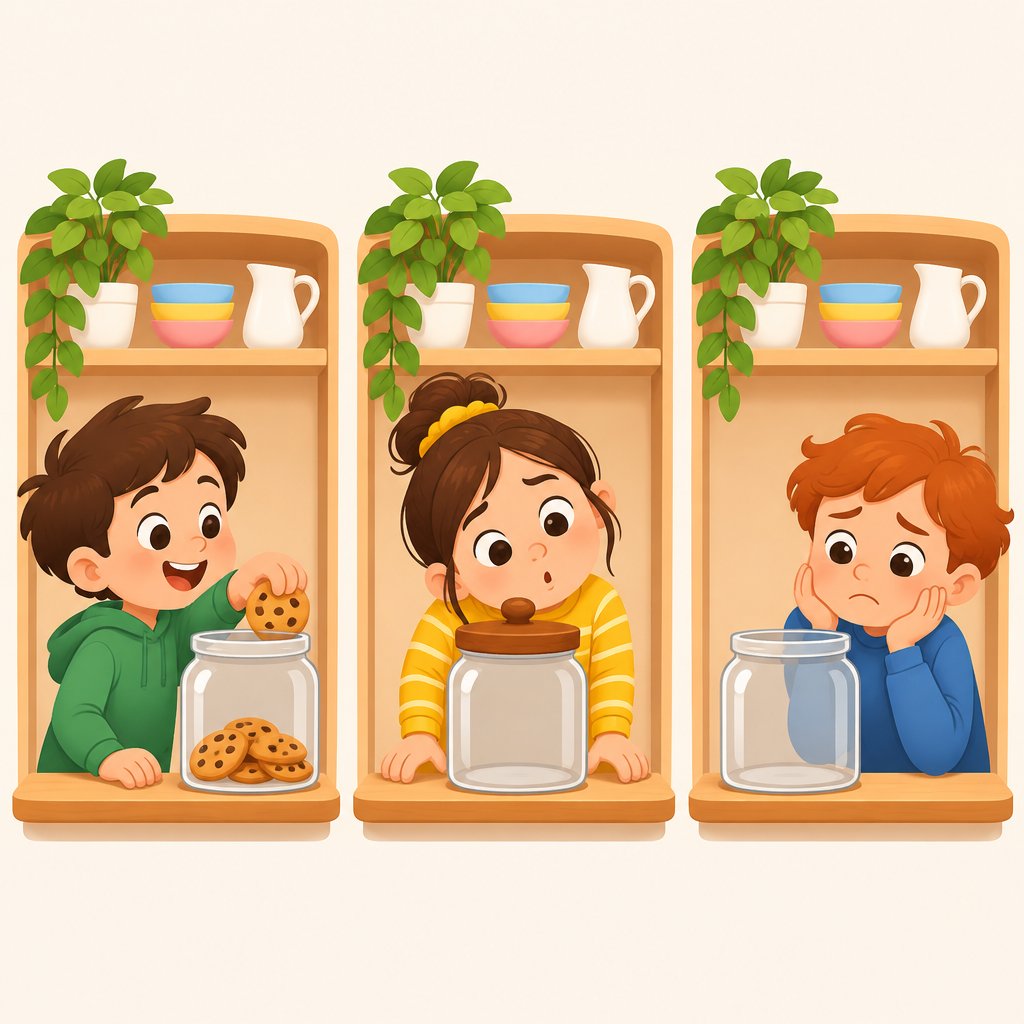
We use some, any and no to talk about an amount when we don't say the exact number. They go before plural nouns (apples, books) and uncountable nouns (milk, money, time).
When to use it
1. Some in positive sentences
I have some apples. There is some milk in the fridge.
2. Any in negative sentences (with not / n't)
I don't have any money. There aren't any chairs in the room.
3. Any in normal questions
Do you have any brothers or sisters? Is there any coffee?
4. No means "not any". Use it with a positive verb.
There is no milk. (= There isn't any milk.) I have no time today.
5. Some in offers and requests. We expect the answer "yes".
Would you like some tea? Can I have some water, please?
6. Any in positive sentences. Here it means "it doesn't matter which".
Sit on any chair you like. Call me any time.
7. Compound words follow the same rules.
There's someone at the door. I didn't see anything. Nobody called me.
How to form it
| Sentence type | Word | Example |
|---|---|---|
| Positive | some | There are some eggs. |
| Negative | not ... any | There aren't any eggs. |
| Negative | no + positive verb | There are no eggs. |
| Question | any | Are there any eggs? |
| Offer / request | some | Would you like some eggs? |
Compound words
| people | things | places | |
|---|---|---|---|
| some | someone / somebody | something | somewhere |
| any | anyone / anybody | anything | anywhere |
| no | no one / nobody | nothing | nowhere |
Which nouns?
- Plural countable nouns: some books, any friends, no cars
- Uncountable nouns: some bread, any information, no money
- With a singular countable noun, use a / an in positive sentences: I have a car. (not some car)
Compound words take a singular verb: Somebody is here. Nothing was wrong.
Common mistakes
-
✗ I don't have no money. → ✓ I don't have any money. / I have no money. English uses only one negative word in a sentence.
-
✗ Nobody didn't come. → ✓ Nobody came. Nobody is already negative, so the verb must be positive.
-
✗ I have any friends in this city. → ✓ I have some friends in this city. / I don't have any friends in this city. In a positive sentence about amount, use some.
-
✗ Are there some shops near here? → ✓ Are there any shops near here? In normal questions, use any. Keep some for offers and requests.
-
✗ There is some apple on the table. → ✓ There is an apple on the table. / There are some apples on the table. Use a / an with one countable thing.
Compare
No / not any / none — all three are negative, but we use them in different ways:
- no + noun, with a positive verb: There is no sugar.
- not any + noun, with a negative verb: There isn't any sugar.
- none without a noun. It is often a short answer: How much sugar is there? None.
✗ There is none sugar. → ✓ There is no sugar.
No sounds a little stronger than not any. In everyday speaking, not any is more common.
Quick tips
- Think: positive = some, negative and questions = any, no = not any.
- If you offer or ask for something politely (Would you like...? Can I have...?), use some.
- Never put two negatives together. Choose don't ... any or no, not both.
- In speaking and writing exams, use no one / nothing / nowhere and anything / anywhere correctly. Examiners notice this.