Adverbs of frequency
always, usually, never and word order.
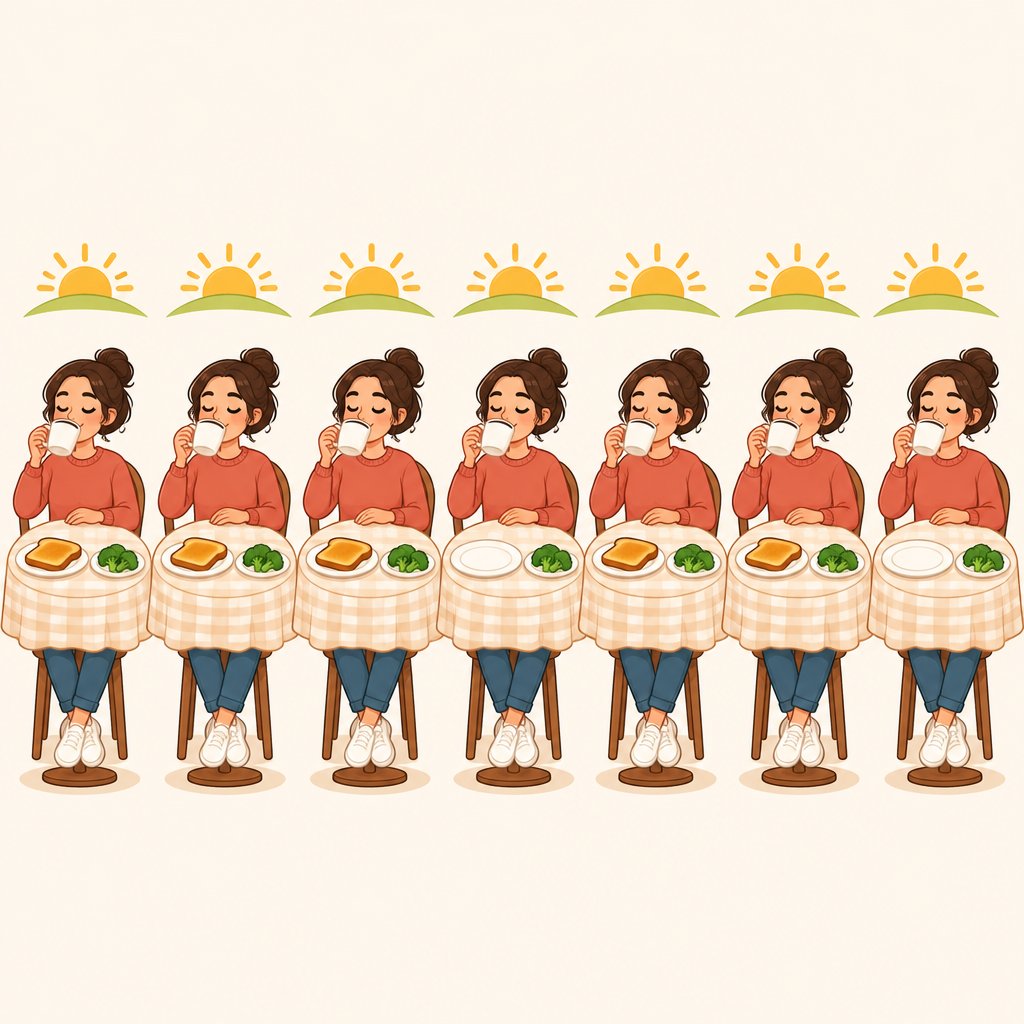
Adverbs of frequency tell us how often something happens. They answer the question How often…?
When to use it
1. To talk about habits and routines. We usually use them with the present simple. I always drink coffee in the morning. She usually walks to work.
2. To show how often, from 100% to 0%.
| Adverb | How often |
|---|---|
| always | 100% |
| usually | about 90% |
| often | about 70% |
| sometimes | about 50% |
| rarely / seldom | about 10% |
| hardly ever | almost 0% |
| never | 0% |
We often eat pasta on Fridays. He hardly ever watches TV.
3. To talk about life experience (A2). We use never and ever with the present perfect. I have never been to Japan. Have you ever eaten sushi?
How to form it
The position of the adverb is the most important rule.
- Before the main verb: I usually get up at 7.
- After the verb be: She is always happy.
- After an auxiliary or modal verb (don't, have, can, will): I have never seen snow. / I can never remember his name.
| Form | Main verb | Verb be |
|---|---|---|
| Positive | You often play tennis. | He is usually late. |
| Negative | You don't often play tennis. | He isn't usually late. |
| Question | Do you often play tennis? | Is he usually late? |
Notes: - In questions, the adverb goes after the subject: Do you usually take the bus? - Never already has a negative meaning, so use it with a positive verb: I never eat meat. - In questions, use ever, not never: Do you ever go swimming? - Sometimes, usually and often can also go at the start or end of a sentence: Sometimes I work at home. / I work at home sometimes. - In short answers, the adverb goes before the auxiliary: Do you walk to work? – Yes, I always do. / Are you tired? – Yes, I often am.
Common mistakes
✗ I go always to the gym. → ✓ I always go to the gym. The adverb goes before the main verb, not after it.
✗ She always is late. → ✓ She is always late. With be, the adverb comes after the verb.
✗ I don't never eat fast food. → ✓ I never eat fast food. (or I don't ever eat fast food.) Don't use two negatives in English.
✗ Always I drink tea. → ✓ I always drink tea. Always and never don't usually start a sentence (except in instructions like Never give up!).
✗ Do you go usually by bus? → ✓ Do you usually go by bus? In questions, put the adverb after the subject and before the main verb.
Compare
Adverbs of frequency vs. frequency expressions (every day, once a week, twice a month, on Mondays).
Adverbs of frequency are one word and usually go in the middle of the sentence: I often visit my parents.
Frequency expressions are groups of words and usually go at the end (or sometimes the start): I visit my parents every weekend. I go to the gym three times a week.
✗ I every day study English. → ✓ I study English every day.
Quick tips
- Remember the rule: before the main verb, after be.
- Never = not ever. Don't add don't or not to never.
- Use ever in questions: Do you ever…? Have you ever…?
- In speaking exams like IELTS, adverbs of frequency help you describe your routine clearly: I usually study in the evening, but I sometimes study at lunchtime.