Conditionals
Beginner
Intermediate
Zero and First Conditional
General truths and real future situations.
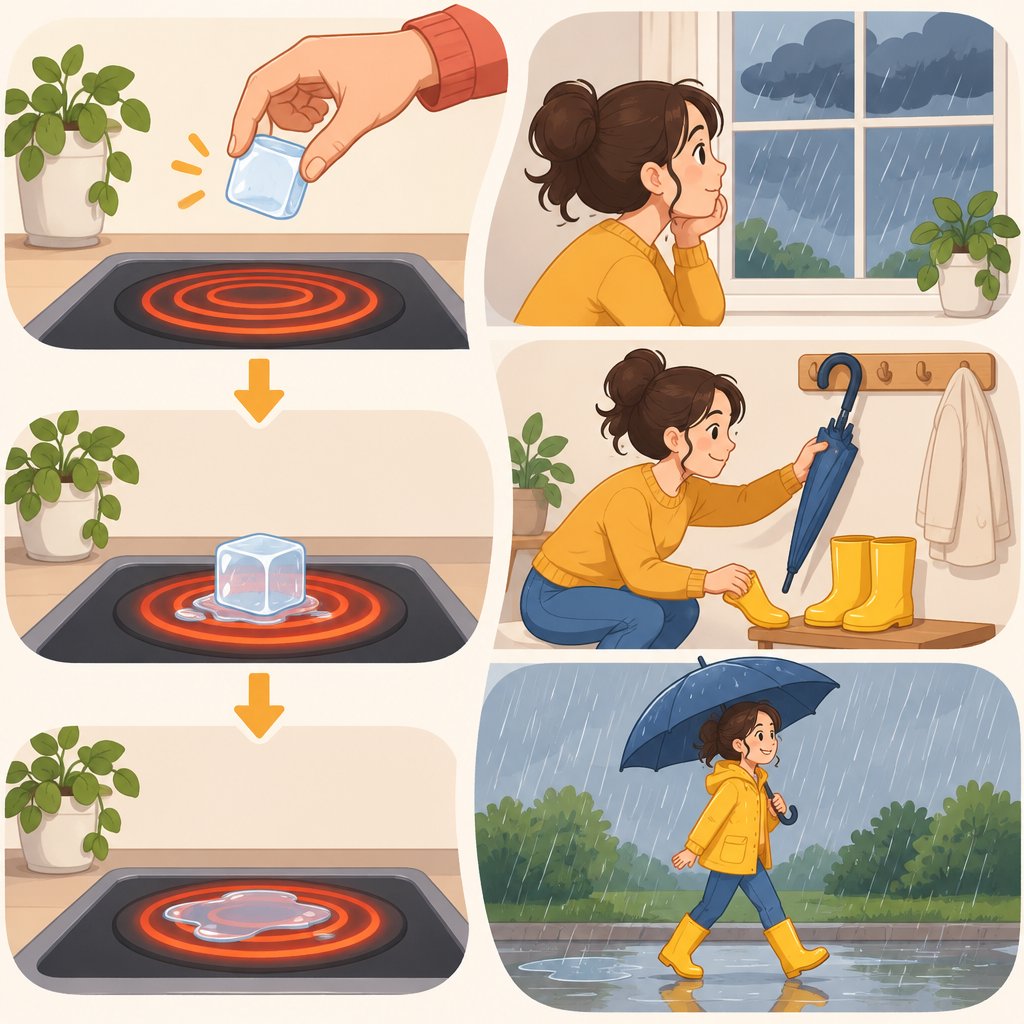
When to use it
Zero conditional: for things that are always true when something happens.
- General truths and science: If you heat ice, it melts. Plants die if they don't get water.
- Habits and routines: If I drink coffee at night, I can't sleep.
In the zero conditional, if means almost the same as when or every time.
First conditional: for a real, possible situation in the future and its likely result.
- Future possibilities: If it rains tomorrow, we'll stay at home.
- Promises and warnings: If you help me, I'll buy you lunch. If you touch that, you'll burn yourself.
- With other modals (can, may, might, should): If we leave now, we might catch the train. If you finish early, you can go home.
- With an instruction (imperative): If you see Anna, tell her to call me.
How to form it
| Type | If clause | Main clause | Example |
|---|---|---|---|
| Zero | if + present simple | present simple | If you mix red and blue, you get purple. |
| First | if + present simple | will / won't + base verb | If you hurry, you'll catch the bus. |
First conditional forms:
| Form | Example |
|---|---|
| Positive | If you hurry, you'll catch the bus. |
| Negative | If you don't hurry, you won't catch the bus. |
| Question | What will you do if you miss the bus? / Will you call me if you're late? |
Word order: You can start with either clause. Use a comma when the if clause comes first: If it's sunny, we'll go out. No comma is needed when it comes second: We'll go out if it's sunny.
Going further (B1–B2):
- Unless = if not: You'll be late unless you leave now. (= if you don't leave now)
- As long as / provided that = only if: You can borrow my car as long as you drive carefully.
- Other present tenses can go in the if clause: If you're feeling tired, go to bed. If you've finished, you can leave.
- Should makes the situation less likely and more formal: If you should need help, please call reception.
- Time words like when, as soon as, before, after, until follow the same rule as if. Use the present, not will: I'll call you as soon as I arrive.
Common mistakes
- ✗ If it will rain, we will stay home. → ✓ If it rains, we will stay home.
Don't use will in the if clause. Use the present simple. - ✗ When I will get home, I'll text you. → ✓ When I get home, I'll text you.
Time clauses about the future also use the present simple. - ✗ Unless you don't study, you'll fail. → ✓ Unless you study, you'll fail.
Unless already means if not, so don't add another negative. - ✗ If I see her tomorrow, I tell her the news. → ✓ If I see her tomorrow, I'll tell her the news.
This is one future event, not a general truth, so use the first conditional.
Compare
Zero vs first conditional
- Zero = always true: If you press this button, the machine stops. (It happens every time.)
- First = one specific future situation: If you press this button, the machine will stop. (I'm warning you about now.)
If vs when
- If = maybe it will happen: If I see Tom, I'll give him your message. (I'm not sure I will see him.)
- When = it will certainly happen: When I see Tom, I'll give him your message. (I know I will see him.)
First vs second conditional
- First = real and possible: If I get the job, I'll move to Toronto.
- Second = unreal or unlikely: If I won the lottery, I'd travel the world.
Quick tips
- Remember the rule: no will after if (or after when, as soon as or until) when you talk about the future.
- Ask yourself: Is this always true, or is it about one future situation? Your answer tells you whether to use zero or first.
- In IELTS and CELPIP speaking, use unless, as long as and modals like might to show a wider range of grammar.
- Check your commas. Put a comma after the if clause only when it comes first.