Fixing Instead of Replacing: The Right-to-Repair Movement
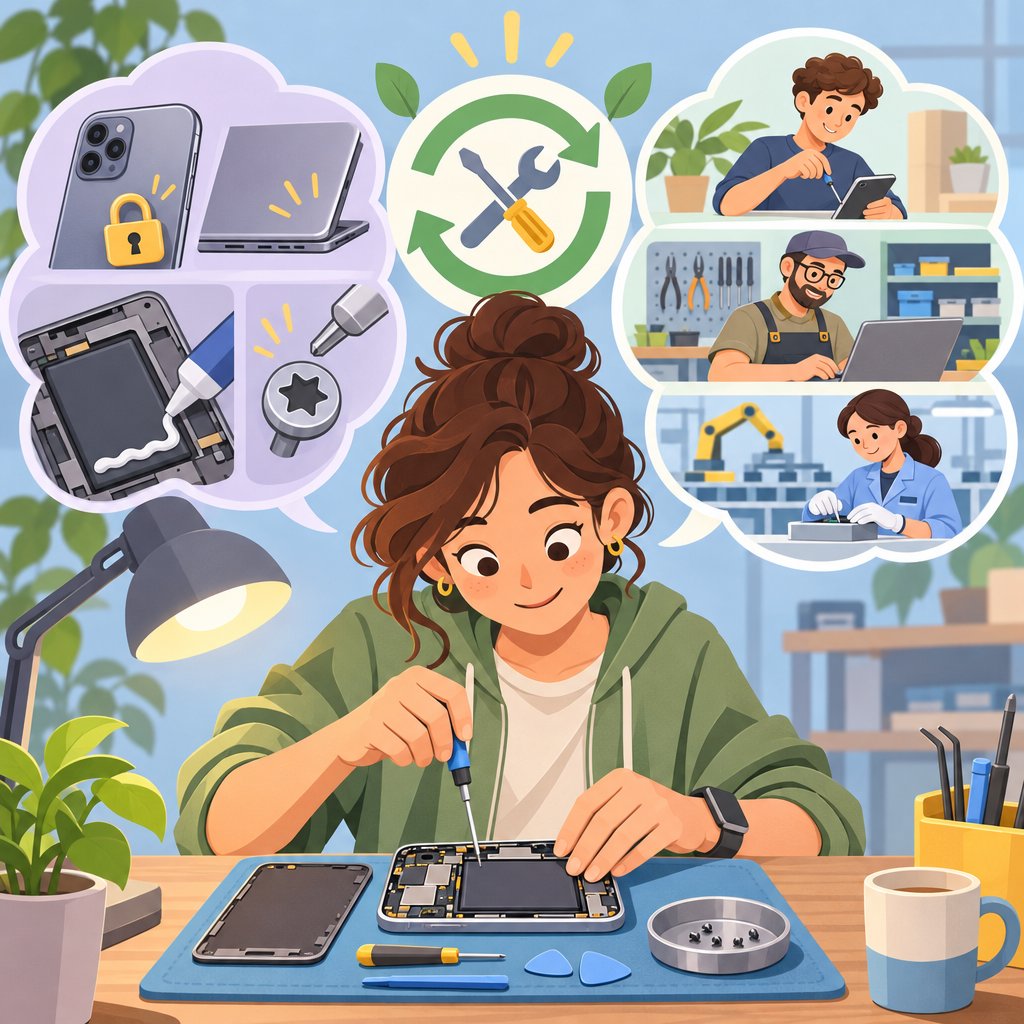
For most of the twentieth century, when a household appliance broke down, people usually called a repair technician. A toaster or washing machine might last a decade, and a skilled engineer could often track down the fault and replace a single part. Today, the situation is very different. Many modern gadgets are sealed tightly, glued together, and packed with components that cannot be removed without special tools. When something stops working, customers frequently find that the cheapest option is to throw it away and buy a new one.
This trend has led to a growing campaign known as the right-to-repair movement. Supporters argue that people should be able to fix the products they own, just as they once did. They point out that manufacturers often restrict access to spare parts, repair manuals, and diagnostic software. As a result, independent repair shops sometimes have to guess what is wrong, or they give up altogether. Campaigners say this arrangement pushes customers toward official service centres, which can be expensive and slow. In their view, a phone that cannot be opened is not really owned by the person who paid for it.
Manufacturers offer a different perspective. Many companies argue that tight control over their products protects safety and privacy. A repair carried out by an untrained person, they say, could damage a battery or expose personal data. Some firms also claim that sealed designs make devices thinner, lighter, and more water-resistant, which many customers actually want. Although these arguments have some merit, critics reply that safety concerns are sometimes used as an excuse to keep profitable repair work in-house. The debate has therefore become a question of who should be trusted with fixing things.
Governments have started to take notice. Several regions have passed laws that require companies to make spare parts and manuals available to the public for certain products, such as household appliances and smartphones. These rules are still new, and it remains to be seen how well they will work in practice. Nevertheless, the movement has already encouraged many people to look at their belongings differently. Community repair cafés, where volunteers help neighbours mend clothes, bicycles, and laptops, have spread quickly in many cities. Perhaps the most important lesson is simple: the most sustainable gadget is often the one we already own, if we are willing to keep it working a little longer.