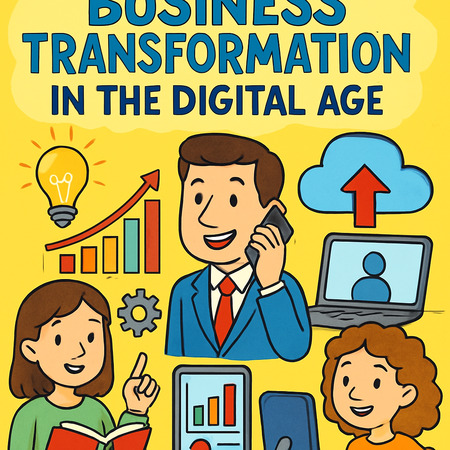
The Art of Business Transformation in the Digital Age
In today's rapidly evolving marketplace, businesses are compelled to reinvent themselves or risk becoming obsolete relics of a bygone era. The concept of digital transformation, which was once considered a luxury reserved for technology giants, has now become an absolute necessity for organizations of all sizes. This metamorphosis extends far beyond the mere adoption of new software; rather, it represents a fundamental shift in how companies operate, think, and deliver value to their customers.
The journey toward meaningful business transformation is fraught with challenges that must be carefully navigated. Companies must confront deeply ingrained cultural resistance, where employees cling to familiar processes despite their inefficiency. Legacy systems, which have served as the backbone of operations for decades, often prove to be formidable obstacles to progress. Furthermore, the financial investment required to overhaul entire infrastructures can be substantial, making the decision to proceed a calculated risk that demands careful deliberation from leadership.
However, organizations that successfully navigate these turbulent waters frequently discover that the rewards far outweigh the initial investments. Enhanced operational efficiency is typically achieved when outdated workflows are replaced with streamlined digital processes. Customer experiences are fundamentally transformed when personalization becomes possible through data analytics and artificial intelligence. Employees, freed from repetitive administrative tasks, can redirect their creativity and expertise toward more strategic initiatives that truly matter.
Consider the case of established retailers who found themselves on the brink of extinction as e-commerce platforms proliferated. Rather than accepting defeat, many underwent comprehensive digital transformations that allowed them to integrate online and offline channels seamlessly. By embracing omnichannel strategies, these companies not only survived but thrived, discovering that their physical locations could serve as fulfillment centers and experiential spaces rather than mere transaction points.
The role of leadership cannot be overstated in this transformative process. Visionary executives who communicate a compelling narrative about why change is necessary can inspire organizational buy-in that proves invaluable during difficult transitions. They must champion innovation while simultaneously maintaining realistic expectations about timelines and outcomes. Moreover, they bear the responsibility of cultivating a culture where experimentation is encouraged and calculated failures are viewed as learning opportunities rather than career-limiting setbacks.
Data has emerged as the lifeblood of modern business operations. Organizations that harness the power of analytics gain unprecedented insights into customer behavior, market trends, and operational inefficiencies. This intelligence-driven approach allows companies to make decisions based on empirical evidence rather than intuition, fundamentally altering the competitive landscape.
Looking forward, the businesses that will dominate their industries are those that view transformation not as a one-time project with a definitive endpoint, but rather as an ongoing journey of continuous improvement and adaptation. The ability to pivot swiftly in response to emerging market conditions has become a competitive advantage as valuable as any physical asset. In essence, success in the modern business landscape belongs to those organizations that remain perpetually curious, agile, and willing to challenge the status quo, understanding that standing still is, paradoxically, the riskiest move of all.