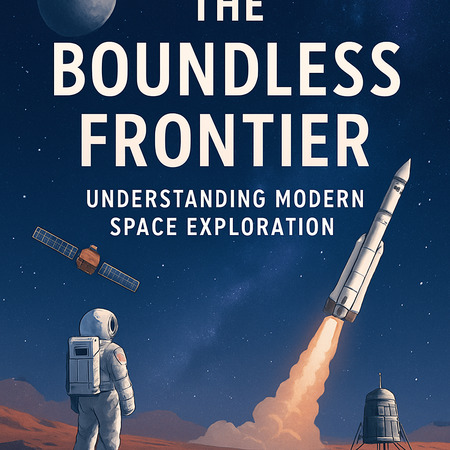
The Boundless Frontier: Understanding Modern Space Exploration
For centuries, humanity has gazed upward at the night sky with profound curiosity, yet only in the last seven decades have we possessed the technological capability to venture beyond Earth's protective atmosphere. Space exploration, once considered the exclusive domain of superpowers engaged in competitive rivalry, has undergone a remarkable transformation into a collaborative enterprise characterized by international cooperation and private sector innovation.
The motivations driving space exploration are as diverse as they are compelling. While scientific discovery remains paramount—enabling us to understand cosmic origins, search for extraterrestrial life, and unlock the universe's fundamental mysteries—the practical applications derived from space technology have revolutionized daily existence. Satellites launched into orbit have fundamentally altered communication, weather forecasting, and navigation systems upon which modern civilization depends. Furthermore, the technological spinoffs from aerospace research have generated innovations ranging from medical devices to advanced materials, demonstrating that investment in space ventures yields tangible earthly benefits.
However, the endeavor is not without considerable challenges. The extreme conditions encountered in space demand unprecedented engineering precision and resilience. Radiation exposure, microgravity effects on human physiology, and the psychological toll of isolation present formidable obstacles that scientists and astronauts must continually overcome. Additionally, the astronomical costs associated with space missions have sparked legitimate debates about resource allocation, particularly when terrestrial problems demand urgent attention.
The landscape of space exploration has shifted dramatically in recent years. Whereas government agencies monopolized this field, ambitious entrepreneurs have established private companies pursuing ambitious agendas. These commercial enterprises have democratized access to space, reducing launch costs through innovative reusable rocket technology and developing space tourism initiatives. Simultaneously, emerging spacefaring nations have entered the competition, expanding the international dimension of cosmic exploration.
The Artemis program represents humanity's most recent monumental endeavor, aiming to establish sustainable lunar presence and utilize the Moon as a stepping stone toward Mars exploration. This ambitious vision encapsulates our species' indomitable spirit—the ceaseless drive to transcend limitations and expand knowledge horizons. Successfully establishing human settlements beyond Earth would constitute one of civilization's greatest achievements, fundamentally altering our species' relationship with the cosmos.
Yet space exploration transcends mere technological achievement; it embodies deeper philosophical significance. Observing Earth from space profoundly transforms astronauts' perspectives, fostering environmental consciousness and emphasizing our planetary unity. This cosmic perspective reminds us that regardless of terrestrial divisions, humanity shares a common destiny on a fragile, isolated sphere suspended in an infinite void.
Looking forward, space exploration faces critical decisions. Sustainability must become paramount—both financially and environmentally. Orbital debris accumulation threatens future missions, while resource extraction from celestial bodies raises ethical questions about cosmic stewardship. Nevertheless, the continuation of space exploration appears inevitable. Whether driven by scientific curiosity, economic incentive, or existential necessity, humanity seems inexorably drawn toward the stars, compelled by an ancient impulse to explore, discover, and ultimately, transcend our current boundaries.