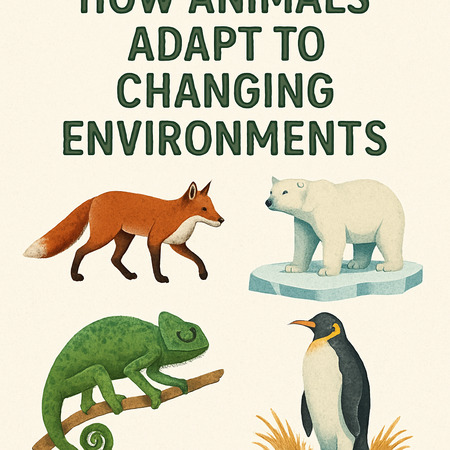
How Animals Adapt to Changing Environments
Animals are incredibly smart creatures that have learned to adapt to their surroundings over thousands of years. From tiny insects to enormous whales, every species has developed unique strategies to survive in their natural habitat. However, the world is changing faster than ever before, and many animals are struggling to keep up with these rapid changes.
One amazing example of adaptation is the Arctic fox. For many generations, these foxes have had thick white fur that helps them blend into the snowy landscape. As temperatures rise due to climate change, snow is melting earlier each year. This means Arctic foxes are finding it harder to hide from predators and catch their food. Some foxes are slowly developing thicker bodies and darker fur to survive in this new environment.
Another fascinating case is happening in cities around the world. Urban wildlife, such as raccoons and foxes, have moved into towns looking for food. Rather than starving in the countryside, they have adapted to living among humans. They've learned when humans take out the rubbish and how to open bins. This shows that animals are flexible thinkers, not just creatures of instinct.
The biggest threat facing animals today is habitat loss. When forests are cut down or wetlands are drained, animals lose their homes. They cannot simply move to a new place because other animals already live there. Scientists estimate that we are losing animal species ten times faster than we did a hundred years ago. This situation is extremely serious, and we must take action before it's too late.
Conservation efforts are making a real difference in some parts of the world. Thanks to protection programs, species like the giant panda and Arabian oryx have come back from the edge of extinction. These success stories prove that when people work together, they can save endangered animals.
What can ordinary people do to help? We can support wildlife organizations, recycle more, and make sustainable choices. If we reduce our carbon footprint, we can slow down climate change and give animals more time to adapt. We can also create green spaces in our gardens and neighborhoods where wildlife can find shelter and food.
The truth is that animals are not just interesting to study—they are essential to our survival. Bees pollinate crops, forests clean our air, and oceans produce oxygen. If we protect animals, we protect ourselves. The challenge ahead is enormous, but by working together, both humans and animals can build a better future.