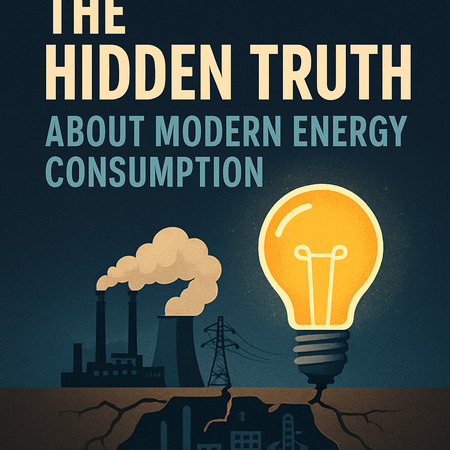
The Hidden Truth About Modern Energy Consumption
In the twenty-first century, energy has become the lifeblood of modern civilization, yet our relationship with this vital resource remains profoundly complicated. While technological advances have illuminated our cities and powered unprecedented economic growth, they have simultaneously created a shadow that threatens to eclipse our future. The challenge we face is not merely one of supply and demand, but rather a fundamental reassessment of how humanity harnesses and utilizes the forces of nature.
The world's energy consumption has grown exponentially, driven by the aspirations of developing nations and the insatiable appetite of wealthy economies. Fossil fuels, which have dominated the global energy landscape for over a century, have been the engine of industrial progress, yet they carry an environmental cost that is increasingly difficult to ignore. Carbon dioxide emissions, which accumulate in our atmosphere like an invisible blanket, trap heat and alter weather patterns in ways that scientists have warned us about for decades.
However, a transformation is underway. Renewable energy sources—solar, wind, hydroelectric, and geothermal—represent humanity's attempt to forge a different path. These technologies, once considered marginal and unreliable, have been revolutionized through innovation and investment. Solar panels, which convert sunlight directly into electricity, have become remarkably efficient, their costs plummeting by over eighty percent in recent years. Wind turbines now dominate the landscapes of progressive nations, their massive blades rotating silently, harvesting the perpetual gift of moving air.
Yet transitioning to renewable energy is far from straightforward. The infrastructure supporting fossil fuels is deeply entrenched, protected by powerful economic interests and decades of investment. Furthermore, renewable sources are inherently intermittent; the sun does not always shine, and the wind does not always blow. Energy storage technology—particularly advanced batteries—must be developed and scaled to overcome this fundamental limitation. Battery storage systems are being deployed at an unprecedented rate, creating virtual reservoirs of electricity that can be released when demand peaks.
The story of energy is ultimately a story about choices and consequences. Every decision made by governments, corporations, and individuals ripples outward, affecting not only current living standards but also the world inherited by future generations. Some nations have embraced this challenge with remarkable commitment; Denmark now generates nearly eighty percent of its electricity from wind power, while Costa Rica has achieved periods where renewable sources met one hundred percent of demand.
The path forward requires unprecedented cooperation and innovation. Energy efficiency must be prioritized alongside renewable generation; buildings must be retrofitted, transportation systems reimagined, and industrial processes redesigned. The transition will be neither quick nor painless, yet the alternative—continuing our current trajectory—is demonstrably unsustainable.
Ultimately, our energy future will be determined not by the resources available to us, but by the vision and determination we bring to transforming how we use them. The question is not whether change is possible, but whether we possess the collective will to embrace it.