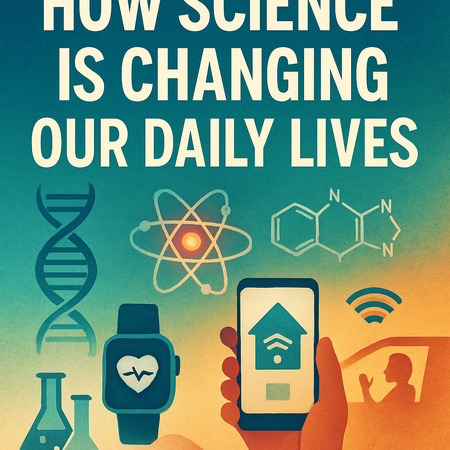
How Science is Changing Our Daily Lives
Science is all around us, and it has been changing the way we live in remarkable ways. Whether we realize it or not, scientific discoveries affect our daily routines, from the moment we wake up until we go to bed.
Consider your smartphone. Just twenty years ago, having a powerful computer in your pocket seemed like pure science fiction. However, thanks to breakthroughs in physics and materials science, we now carry devices that are thousands of times more powerful than computers from the 1980s. Scientists who studied semiconductors and miniaturization made this possible. Today, millions of people use these devices to communicate, work, and learn.
Another area where science has made a huge difference is medicine. Researchers have been working hard to develop new treatments for diseases that once seemed impossible to cure. For example, vaccines against serious illnesses now save millions of lives every year. During the recent pandemic, scientists around the world put their heads together to create vaccines in record time. This showed us how important scientific collaboration is.
Energy and environmental science represent another crucial field. As our planet faces climate change, scientists are developing renewable energy sources like solar panels and wind turbines. These technologies rely on our understanding of physics and engineering. Many countries have already started to rely more on clean energy, and this trend will continue to grow.
But science doesn't always require complicated laboratories or expensive equipment. In fact, citizen science has become increasingly popular. Ordinary people can now participate in real scientific research through their computers or smartphones. They might help classify galaxies, track bird migrations, or monitor water quality in their local areas. This approach has proven to be very valuable, as large amounts of data can be collected quickly.
The relationship between science and society is becoming stronger. Scientists are no longer just working in isolation; they are communicating their findings to the public and listening to feedback. This two-way conversation helps ensure that scientific research addresses real-world problems that matter to people.
As we look toward the future, science will continue to shape our world. From artificial intelligence to biotechnology, new discoveries will present both opportunities and challenges. What is clear is that science literacy has become essential for everyone. Understanding how science works helps us make better decisions about our health, our environment, and our technology. The future belongs to those who embrace curiosity and ask questions about the world around them.