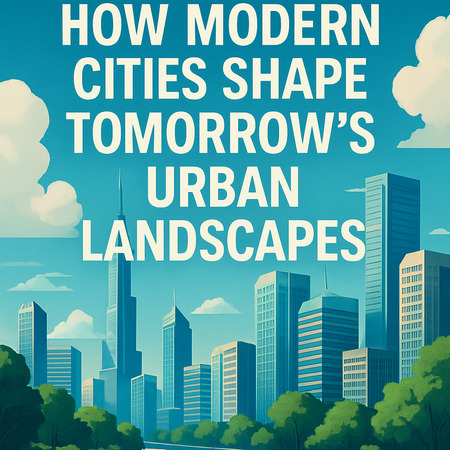
How Modern Cities Shape Tomorrow's Urban Landscapes
The art and science of urban planning have become increasingly vital as cities around the world grapple with unprecedented growth and environmental pressures. Urban planners, who are essentially architects of societal transformation, must balance the competing demands of economic development, environmental sustainability, and social equity—a delicate equilibrium that shapes the very fabric of modern civilization.
Historically, cities have developed haphazardly, with buildings and infrastructure expanding in directions dictated by geography and commercial interests rather than strategic foresight. However, contemporary urban planning has evolved into a sophisticated discipline incorporating data analytics, environmental science, and community engagement. The transformation of Copenhagen into a bicycle-friendly metropolis exemplifies how intentional design can fundamentally reshape inhabitants' lifestyles and reduce carbon emissions simultaneously.
One of the most pressing challenges confronting planners is the housing crisis that has gripped numerous metropolitan areas. Skyrocketing property values, driven by limited supply and speculative investment, have rendered homeownership unattainable for countless individuals. This phenomenon has necessitated innovative approaches: mixed-income housing developments, adaptive reuse of abandoned industrial sites, and inclusionary zoning policies that mandate affordable units within new construction projects. Through these mechanisms, cities attempt to preserve economic diversity and prevent the phenomenon of gentrification from completely erasing established communities.
Sustainability has emerged as the philosophical cornerstone of forward-thinking urban development. Green spaces are no longer considered luxuries but essential infrastructure providing psychological benefits, improving air quality, and mitigating urban heat island effects. Singapore's transformation into a "garden city" demonstrates how aggressive reforestation and vertical gardens can coexist with high-density development. Similarly, pedestrian-oriented neighborhoods reduce automobile dependency, thereby decreasing pollution while fostering vibrant street-level commerce and social interaction.
Public transportation systems represent another critical component through which planning authorities can influence urban patterns. Efficient, affordable transit networks determine whether residents can access employment, education, and services without personal vehicles. Cities like Seoul have invested substantially in subway infrastructure, thereby reducing congestion and enabling peripheral neighborhoods to flourish. Conversely, regions with inadequate transit systems remain enslaved to automobile culture, perpetuating sprawl and environmental degradation.
Technology has introduced novel possibilities for urban planning, though it simultaneously presents risks. Real-time data collection through smart sensors enables cities to optimize traffic flow, energy consumption, and waste management. However, the deployment of surveillance infrastructure raises legitimate concerns about privacy and governmental overreach. Planners must navigate these technological frontiers thoughtfully, ensuring that efficiency gains do not compromise fundamental human rights.
Ultimately, successful urban planning transcends mere physical design. It requires genuine dialogue with diverse stakeholders—residents, businesses, environmental advocates, and marginalized communities whose voices have historically been excluded from decision-making processes. When executed with wisdom and inclusivity, urban planning becomes a powerful vehicle for crafting cities where ecological integrity, economic opportunity, and human flourishing coexist harmoniously. The cities we design today will profoundly influence the possibilities available to generations yet unborn.