The Delicate Balance Between Truth and Consequence in Modern Journalism
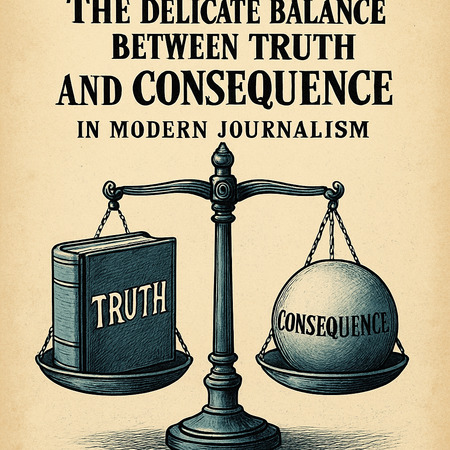
The foundation of democratic societies has long been built upon the premise that a free and responsible press serves as a guardian of truth. However, in an era where information spreads like wildfire across digital platforms, the ethical responsibilities of journalists have become increasingly complex and contested. The question of what constitutes responsible reporting is no longer a straightforward matter of simply presenting facts; rather, it has evolved into a nuanced balancing act between multiple competing obligations.
Consider the case of a prominent investigative journalist who uncovers evidence of corruption within a governmental agency. While the public undeniably possesses a right to know about such malfeasance, the journalist must also consider the potential consequences of premature disclosure. If the story is published before law enforcement agencies have completed their investigation, crucial evidence might be compromised, and perpetrators could evade justice. Conversely, withholding information to protect an ongoing investigation could be perceived as complicity or as a betrayal of the public trust. This scenario exemplifies the thorniest dilemma in contemporary media ethics: reconciling the imperative to inform with the responsibility to avoid causing unjustified harm.
Another critical dimension of media ethics concerns the treatment of vulnerable populations. When reporting on sensitive matters such as mental health crises, suicide, or abuse, journalists are obligated to exercise considerable restraint and sensitivity. Research has demonstrated that sensationalized coverage of suicide, for instance, can inadvertently trigger copycat incidents among susceptible individuals. Thus, responsible journalists must weigh the newsworthiness of a story against the potential psychological impact on their audience. This represents not merely a professional obligation but a moral imperative that transcends conventional journalistic ambition.
The proliferation of social media has further complicated the ethical landscape. The pressure to break stories first, to generate engagement through provocative headlines, and to capitalize on viral moments has created an environment where ethical considerations are frequently subordinated to commercial imperatives. False or misleading information can circulate globally before corrections are issued, poisoning the information ecosystem and eroding public trust in legitimate news sources. Media outlets face an unprecedented responsibility to combat misinformation, yet doing so requires resources and commitment that many struggling newsrooms simply lack.
Moreover, the issue of source protection remains paramount in journalistic ethics. Journalists have traditionally fiercely defended their sources' confidentiality, recognizing that without such protection, vulnerable whistleblowers would hesitate to expose wrongdoing. However, technological advances and government surveillance capabilities have rendered this protection increasingly fragile. Reporters must now grapple with whether digital communication with sources can truly remain confidential, adding another layer of complexity to their decision-making processes.
Ultimately, media ethics cannot be reduced to a rigid set of rules or principles. Instead, they represent an ongoing conversation between journalists, audiences, and society about what constitutes responsible communication in a rapidly changing world. This conversation demands intellectual honesty, moral courage, and a steadfast commitment to principles that often conflict with commercial pressures and immediate circumstances. Only through continuous reflection and dialogue can the media fulfill its essential democratic function while minimizing harm and maintaining the trust upon which journalism ultimately depends.