Questions
Beginner
Intermediate
Question forms
Word order in yes/no and wh- questions.
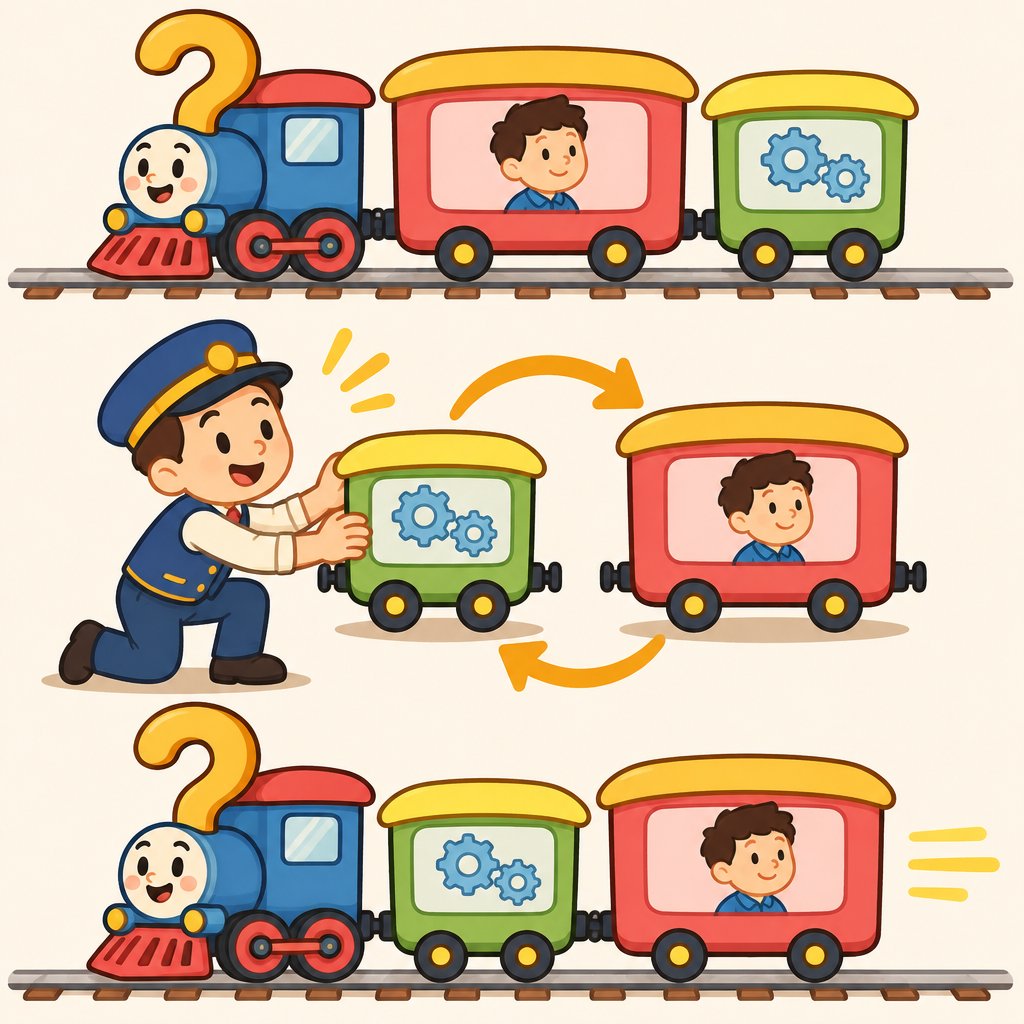
When to use it
- Yes/no questions check if something is true. The short answer is usually yes or no. Are you ready? / Did she call you yesterday?
- Wh- questions ask for information. They start with a question word: who, what, where, when, why, which, whose, how (also how much, how long, etc.). Where do you live? / How long have you studied English?
- Subject questions ask about the person or thing that does the action. The question word is the subject. Who called you? / What happened at the meeting?
- Negative questions show surprise, or check something you already believe. Don't you like coffee? / Isn't that your bus?
How to form it
The main rule: put the auxiliary verb (be, do, have, can, will, etc.) before the subject.
(Question word) + auxiliary + subject + main verb + ...?
| Tense | Statement | Yes/no question | Wh- question |
|---|---|---|---|
| Present simple | You work here. | Do you work here? | Where do you work? |
| Present simple (he/she/it) | He works here. | Does he work here? | Where does he work? |
| Past simple | They left early. | Did they leave early? | When did they leave? |
| Verb be | She is tired. | Is she tired? | Why is she tired? |
| Present continuous | You are waiting. | Are you waiting? | Who are you waiting for? |
| Present perfect | He has finished. | Has he finished? | What has he finished? |
| Modal verbs | We can park here. | Can we park here? | Where can we park? |
| Future (will) | It will rain. | Will it rain? | When will it rain? |
Important points:
- After do / does / did, use the base form of the main verb: Does she like it? (not likes), Did you go? (not went).
- If the main verb is be, just swap the subject and be: You are late. → Are you late?
- Prepositions usually go at the end in everyday English: Who are you talking to? / What is this tool used for?
- Subject questions use normal statement word order and no do/does/did: Who lives here? (subject question: someone lives here) Who did you see? (object question: you saw someone)
- Negative questions use a contracted auxiliary: Why didn't you tell me? / Haven't you finished yet? The full form is more formal: Why did you not tell me?
Common mistakes
- ✗ Where you live? → ✓ Where do you live? In the present simple, you need do/does before the subject.
- ✗ Did you went to the party? → ✓ Did you go to the party? Did already shows the past, so the main verb stays in the base form.
- ✗ What time the film starts? → ✓ What time does the film start? Wh- questions need the auxiliary before the subject, and the -s moves to does.
- ✗ Who did write this email? → ✓ Who wrote this email? Who is the subject here, so do not use did.
- ✗ Can you tell me where is the station? → ✓ Can you tell me where the station is? In indirect questions, use statement word order (see below).
Compare
Learners often mix up direct questions and indirect questions. Indirect questions begin with a polite phrase like Could you tell me..., Do you know... or I wonder.... After that phrase, use statement word order and no do/does/did.
| Direct question | Indirect question |
|---|---|
| Where is the bank? | Do you know where the bank is? |
| What time does the class start? | Could you tell me what time the class starts? |
| Has he finished? | I wonder if/whether he has finished. |
For yes/no questions, add if or whether. Indirect questions sound more polite, so they are very useful in speaking tests and formal emails.
Quick tips
- Remember QASI: Question word, Auxiliary, Subject, Infinitive (base verb): Where (Q) did (A) you (S) go (I)?
- No auxiliary in the statement? Add do, does or did to make the question.
- Ask yourself: is the question word the subject? If yes, keep normal order: What made you choose this job?
- In speaking exams, use indirect questions to sound polite: Could you tell me what you mean?