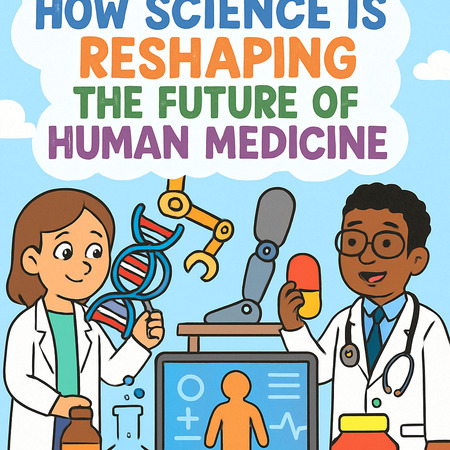
How Science is Reshaping the Future of Human Medicine
The landscape of modern medicine has been fundamentally transformed by scientific innovation, which has penetrated every aspect of healthcare from diagnosis to treatment. What was once considered impossible has become routine, thanks to relentless pursuit of knowledge and technological advancement. Today, patients suffering from previously incurable diseases are being offered hope through groundbreaking discoveries that challenge our understanding of the human body.
Consider the remarkable journey of genetic medicine, a field that has blossomed from theoretical concepts into practical applications. Scientists have deciphered the human genome, essentially reading the instruction manual of life itself. This achievement, which required decades of collaborative effort across continents, has enabled researchers to identify genetic mutations responsible for inherited diseases. By understanding these molecular blueprints, physicians can now predict susceptibility to certain conditions and, in some cases, intervene before symptoms manifest. Gene therapy, once relegated to the realm of science fiction, is now being successfully employed to treat previously untreatable genetic disorders, offering patients a second chance at healthy lives.
The intersection of artificial intelligence and medical science represents another frontier where transformative change is occurring. Machine learning algorithms trained on millions of medical images can now detect cancers, cardiovascular abnormalities, and neurological conditions with remarkable accuracy, sometimes surpassing human experts. These intelligent systems are not replacing doctors; rather, they are augmenting human capability, freeing physicians to focus on patient care while algorithms handle the painstaking analysis of complex data. This synergy between human intuition and computational power exemplifies how modern science operates as an orchestra of diverse disciplines working in harmony.
Immunotherapy stands as a testament to science's power to unlock hidden potential within the human immune system. Rather than attacking cancer cells directly with toxic chemicals, researchers have discovered how to awaken the body's natural defense mechanisms, essentially training the immune system to recognize and eliminate malignant cells. This paradigm shift has revolutionized cancer treatment, transforming what was once a death sentence into a manageable chronic condition for many patients. The philosophical implications are profound: we have learned to cooperate with our own biology rather than wage war against it.
Yet science's influence extends beyond physical health into the realm of mental well-being. Neuroscience has illuminated the biological underpinnings of depression, anxiety, and other psychiatric conditions, dismantling the stigma that once surrounded mental illness. Brain imaging technologies have revealed that these conditions involve tangible neurochemical imbalances, not character flaws or weakness. This understanding has catalyzed the development of more effective treatments and fostered compassion for those struggling with invisible ailments.
The path forward is neither predetermined nor without obstacles. Ethical questions loom large: How should genetic information be regulated? Who should have access to cutting-edge treatments? How can we ensure that scientific advances benefit all of humanity, not merely the wealthy? These questions demand that scientists engage in dialogue with philosophers, policymakers, and communities.
Ultimately, science represents humanity's greatest collaborative achievement—a collective endeavor to comprehend reality and alleviate suffering. Each discovery builds upon centuries of accumulated knowledge, and each question answered spawns new mysteries to explore. The future of medicine, shaped by scientific inquiry, promises not immortality but something equally precious: lives lived fuller, longer, and with greater dignity.