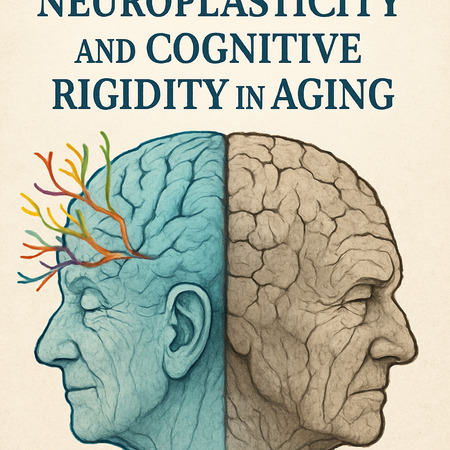
The Paradox of Neuroplasticity and Cognitive Rigidity in Aging
The human brain has long captivated scientists with its seemingly paradoxical nature: simultaneously possessing remarkable adaptability whilst demonstrating stubborn resistance to change. This contradiction becomes particularly pronounced when examining the phenomenon of neuroplasticity—the brain's intrinsic ability to reorganise itself by forming new neural connections throughout life. Yet, contemporary neuroscience has unveiled a more nuanced understanding, suggesting that this plasticity operates within increasingly constrained parameters as we age, creating a complex interplay between potential and limitation that challenges our conventional assumptions about learning and cognitive development.
Neuroplasticity fundamentally operates through synaptic adaptation, whereby repeated stimulation strengthens connections between neurons, effectively rewiring neural pathways. This mechanism underpins learning at every developmental stage, from infants acquiring language to musicians perfecting their craft. However, the efficiency of this process exhibits marked variation across the lifespan. Young brains demonstrate exuberant plasticity, characterised by rapid synapse formation and extensive reorganisation following injury or intense learning experiences. Conversely, mature brains exhibit what researchers term "crystallised plasticity"—the brain retains capacity for change, yet this change occurs at a more measured pace and often requires considerably greater cognitive effort to consolidate new information.
The neurobiological explanation for this phenomenon implicates several interconnected factors. Firstly, myelin, the insulating sheath surrounding axons, becomes increasingly stable with age, facilitating faster neural transmission but simultaneously reducing the brain's flexibility. Secondly, neurotrophic factors—proteins essential for neuronal growth and survival—decline in concentration, thereby diminishing the brain's metabolic resources for constructing new connections. Furthermore, the prefrontal cortex, crucial for executive function and learning consolidation, demonstrates pronounced age-related atrophy. These changes do not constitute pathological degeneration but rather represent normal developmental trajectories that fundamentally alter how the brain approaches learning and adaptation.
Yet paradoxically, accumulated experience confers distinct advantages that offset certain age-related limitations. Older adults often demonstrate superior performance in tasks requiring contextual knowledge, pattern recognition, and strategic problem-solving. This phenomenon, termed the "crystallised intelligence paradox," suggests that whilst processing speed and episodic memory decline, semantic knowledge and procedural expertise remain relatively preserved. The brain essentially trades fluid processing capacity for accumulated wisdom and experiential depth—a trade-off that neuroscientific research increasingly recognises as adaptive rather than purely deficient.
Recent investigations into environmental enrichment have yielded encouraging implications for enhancing neuroplasticity across the lifespan. Cognitive engagement, physical exercise, and novel learning experiences demonstrably stimulate neurogenesis—the generation of new neurons—particularly in the hippocampus. Notably, these benefits are not confined to younger populations; older adults engaging in intellectually demanding activities exhibit enhanced synaptic density and improved cognitive outcomes. This suggests that the narrative of inevitable cognitive decline, whilst biologically grounded, obscures the significant plasticity retained even in advanced age.
The implications of this understanding extend beyond academic discourse into pedagogical and clinical domains. Educational approaches predicated on the assumption that learning capacity diminishes irreversibly with age may inadvertently constrain older adults' potential. Similarly, rehabilitation protocols following neurological insult increasingly leverage neuroplasticity principles, recognising that the adult brain retains genuine, if constrained, capacity for reorganisation. Emerging therapeutic interventions targeting neurotrophic factors and synaptic mechanisms offer tentative promise for ameliorating age-related cognitive decline.
In essence, contemporary neuroscience reveals neuroplasticity not as a simple binary capacity—present in youth, absent in age—but as a sophisticated, multifaceted phenomenon exhibiting dynamic modulation across the lifespan. The apparent paradox between neural adaptability and cognitive rigidity dissolves upon closer examination, revealing instead a complex system characterised by trade-offs, constraints, and compensatory mechanisms. Understanding this nuanced reality enables more sophisticated approaches to learning, rehabilitation, and cognitive health maintenance, ultimately challenging reductive assumptions about what the aging brain can achieve.