Understanding Behavioral Economics and Irrational Decision Making
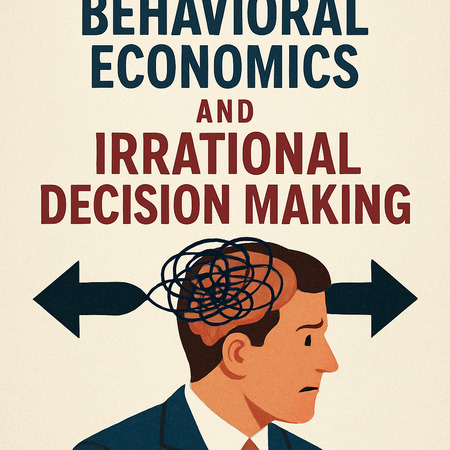
Behavioral economics represents a paradigm shift in how economists conceptualize human decision-making processes. Traditionally, classical economic theory has operated under the assumption that individuals behave rationally, systematically maximizing utility and processing information comprehensively. However, mounting empirical evidence has fundamentally challenged this deterministic model, revealing that human economic behavior is inextricably intertwined with psychological factors, emotional responses, and cognitive limitations that systematically deviate from rational expectations.
The foundational premise of behavioral economics posits that human rationality is inherently bounded. Cognitive psychologists and economists, most notably Daniel Kahneman and Amos Tversky, demonstrated through rigorous experimentation that individuals employ mental shortcuts—termed heuristics—when making decisions under uncertainty. While these heuristics frequently facilitate efficient decision-making, they simultaneously predispose individuals to systematic biases. Anchoring bias exemplifies this phenomenon: when individuals encounter an initial numerical value, whether relevant or arbitrary, this "anchor" disproportionately influences their subsequent judgments, even when the anchor is demonstrably irrelevant.
The concept of loss aversion further illuminates the departure from classical economic theory. Research consistently demonstrates that individuals experience greater psychological discomfort from losses than equivalent gains provide satisfaction. This asymmetry fundamentally alters economic behavior. Investors, for instance, frequently exhibit excessive reluctance to liquidate depreciating assets, thereby incurring substantial opportunity costs. This phenomenon, known as the disposition effect, suggests that emotional attachment to possessions exceeds their objective economic value, contradicting the assumption of rational valuation.
Furthermore, behavioral economists have identified present bias as a pervasive constraint on rational decision-making. Individuals systematically overvalue immediate gratification relative to future benefits, manifesting in suboptimal savings behavior, excessive consumption, and undersaving for retirement. This temporal inconsistency in preferences cannot be satisfactorily explained through conventional economic frameworks, necessitating psychological explanations rooted in immediate emotional gratification and abstract future consequences.
The field has also revealed how individuals are susceptible to framing effects, wherein logically equivalent choices yield divergent selections depending upon their presentation. The classic Asian Disease Problem demonstrates this phenomenon: when outcomes are framed as gains, individuals exhibit risk-averse behavior; when identically framed as losses, risk-seeking behavior predominates. This dependence upon presentation rather than substance undermines the foundational assumption that preferences remain stable and invariant across contexts.
Moreover, behavioral economics elucidates how social preferences and concerns regarding fairness fundamentally shape economic transactions. The ultimatum game provides compelling evidence: individuals reject financially advantageous offers if they perceive them as inequitable, thereby voluntarily forgoing material gain to punish unfair behavior. This willingness to incur costs for punishing perceived injustice contradicts purely self-interested utility maximization.
These insights have profound implications for policy formulation. Recognizing that individuals respond to presentation and context, policymakers increasingly employ "nudges"—subtle environmental modifications that influence choices without restricting options. Default enrollment in retirement plans, for instance, dramatically increases participation rates by leveraging status quo bias, whereby individuals disproportionately favor maintaining current conditions.
Critically, behavioral economics does not entirely repudiate rational choice theory; rather, it refines and contextualizes it. In familiar, repetitive environments with immediate feedback, individuals frequently approximate rationality through learning and habituation. However, in novel, complex scenarios—characteristic of modern financial, healthcare, and policy decisions—psychological biases substantially distort judgment.
The integration of psychological realism into economic analysis represents a maturation of the discipline. By acknowledging that economic actors are embodied humans subject to cognitive limitations, emotions, and social concerns, behavioral economics constructs more accurate and predictive models of actual behavior. This enhanced understanding facilitates superior policy design and institutional arrangements that accommodate, rather than deny, fundamental human psychology.