The Moral Complexities of Artificial Intelligence in Healthcare
The proliferation of artificial intelligence in contemporary healthcare systems presents an unprecedented ethical conundrum that transcends conventional frameworks of medical ethics. As hospitals increasingly delegate diagnostic and treatment recommendations to sophisticated algorithms, stakeholders must grapple with multifaceted moral questions that implicate fundamental principles of patient autonomy, institutional accountability, and distributive justice.
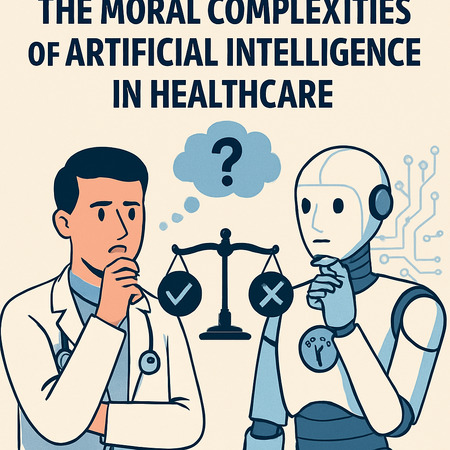
Consider the case of St. Martin's Hospital, which implemented an advanced AI diagnostic system purporting to identify cancerous lesions with 98% accuracy—ostensibly superior to human radiologists. Yet this technological prowess obscures profound ethical tensions. When the algorithm recommends aggressive chemotherapy for a patient whose prognosis remains ambiguous, who bears moral responsibility for adverse outcomes? The physicians who trained the system? The manufacturers who marketed it? The institution that deployed it? Institutional actors often obfuscate accountability by distributing responsibility across multiple stakeholders, thereby potentially absolving themselves of ethical culpability.
Furthermore, the algorithmic opacity inherent in machine learning systems fundamentally undermines informed consent—a cornerstone of medical ethics. Patients deserve comprehensive understanding of how decisions affecting their health are rendered, yet deep neural networks operate as "black boxes," their reasoning processes impenetrable even to their architects. This epistemic asymmetry between patient and provider violates the principle that autonomous agents possess the right to comprehend interventions affecting their bodies. The consent obtained is, paradoxically, uninformed precisely when patients believe themselves adequately apprised.
The implementation of AI systems also exacerbates existing healthcare disparities through a phenomenon termed "algorithmic bias." These systems, trained predominantly on data from privileged populations, frequently exhibit diminished performance when applied to marginalized communities. A risk-assessment algorithm might systematically underestimate cardiovascular disease in Black patients, perpetuating historical inequities in medical care. This injustice is particularly insidious because it masquerades as objective scientific determination while encoding discriminatory assumptions. The purported neutrality of algorithms thus facilitates the perpetuation of structural discrimination under the veneer of impartiality.
Moreover, the economic incentives propelling AI adoption merit critical scrutiny. Healthcare institutions adopt these technologies partly to enhance efficiency and reduce labor costs, not solely to improve patient outcomes. When profit maximization becomes the implicit motive, ethical considerations risk subordination to commercial imperatives. This tension between humanitarian medical practice and capitalistic efficiency optimization creates inherent contradictions that contemporary ethical frameworks struggle to reconcile adequately.
Yet dismissing AI wholesale would itself constitute a moral failure. These systems, despite their limitations, can democratize medical expertise by providing sophisticated diagnostic capabilities to resource-constrained regions lacking specialist physicians. In low-income countries, an AI system might offer the only access to advanced diagnostic acumen available. Thus, the ethical imperative lies not in rejection but in thoughtful, circumscribed implementation with robust safeguards.
Meaningful ethical governance requires several institutional commitments. First, transparency mechanisms must elucidate algorithmic reasoning sufficiently for physicians to exercise informed clinical judgment independently. Second, comprehensive auditing must identify and mitigate biases before deployment. Third, liability frameworks must establish unambiguous accountability rather than distributing responsibility diffusely. Finally, patient engagement in AI governance structures ensures that affected communities participate in decisions shaping their medical experiences.
The fundamental question persists: can societies harness AI's considerable potential while preserving the ethical foundations upon which medicine rests? This requires rejecting both uncritical technophilia and reactionary technophobia. Instead, a nuanced approach acknowledging both promise and peril—tempering enthusiasm with vigilant ethical scrutiny—appears necessary. The challenge confronting healthcare institutions today is not whether to adopt AI, but how to do so responsibly, ensuring that technological advancement ultimately serves authentic human flourishing rather than merely optimizing institutional efficiency or corporate profit.