Subject and object pronouns
I/me, he/him, they/them.
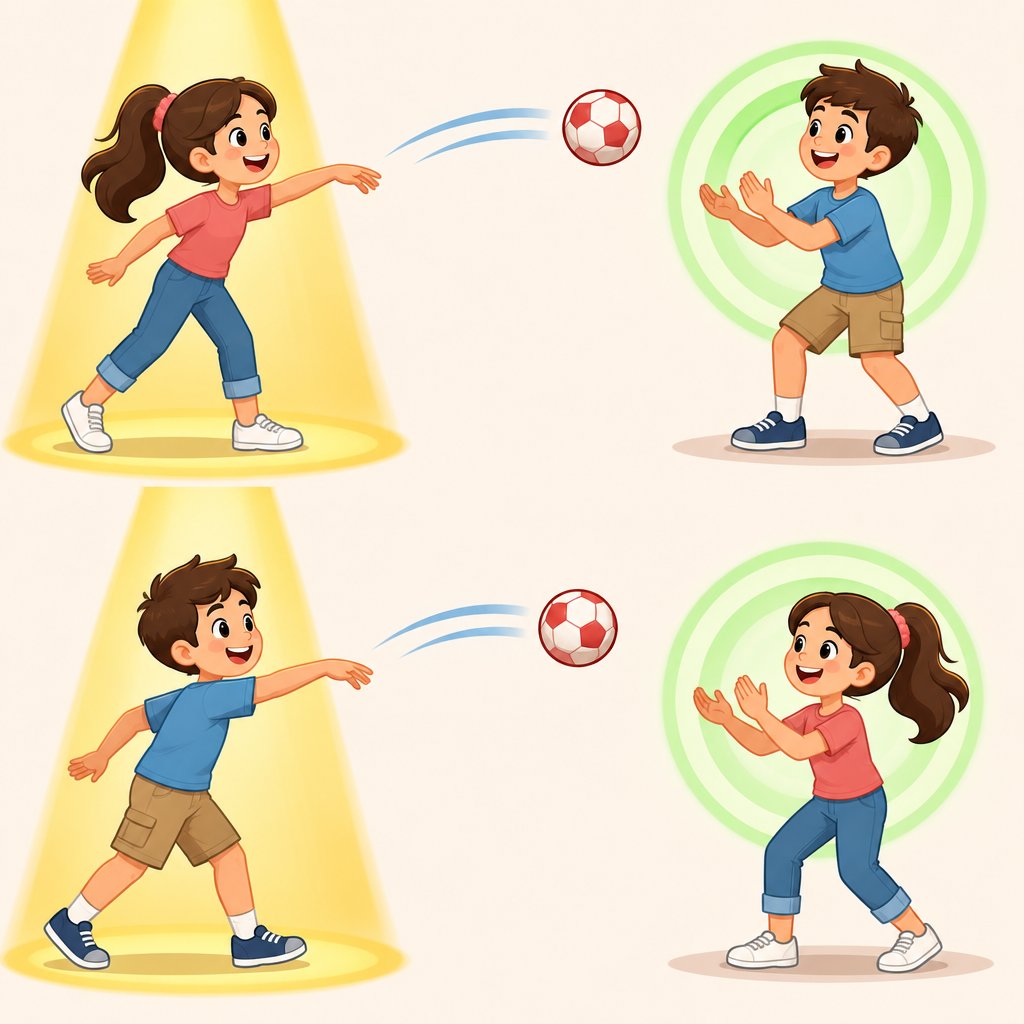
Pronouns are short words that replace a noun, so we don't repeat the same name again and again. English has two main groups: subject pronouns (I, he, they) and object pronouns (me, him, them).
When to use it
1. Subject pronouns come before the verb. They show who does the action. - I live in Toronto. - They work at a hospital.
2. Object pronouns come after the verb. They show who receives the action. - My teacher helps me. - I called him yesterday.
3. Object pronouns come after prepositions (with, for, to, at, about, between). - This present is for her. - Can you come with us?
4. Use object pronouns in short answers and after be in everyday English. - Who wants coffee? Me! - Who's there? It's me.
5. After than and as, people usually use object pronouns in speaking. - My brother is taller than me. - In formal writing you can use a subject pronoun + verb: My brother is taller than I am.
6. They / them can mean one person when we don't know or don't say if the person is a man or a woman. - Someone called. They left a message.
How to form it
| Subject pronoun | Object pronoun | Example |
|---|---|---|
| I | me | I like Anna. Anna likes me. |
| you | you | You know Tom. Tom knows you. |
| he | him | He is my friend. I trust him. |
| she | her | She is late. Let's wait for her. |
| it | it | It is a good book. I love it. |
| we | us | We need help. Can you help us? |
| they | them | They are new. Please meet them. |
Note: you and it do not change.
The position is the same in positive sentences, negatives and questions:
| Form | Example |
|---|---|
| Positive | She sees him every day. |
| Negative | She doesn't see him every day. |
| Question | Does she see him every day? |
Two people together: use the same form you would use for one person. - My sister and I went to the park. (I went → my sister and I went) - The teacher asked my sister and me. (asked me → asked my sister and me)
It is polite to put yourself last: my friend and I, not I and my friend.
Common mistakes
✗ Me am a student. → ✓ I am a student. Before the verb, use a subject pronoun.
✗ She loves he. → ✓ She loves him. After the verb, use an object pronoun.
✗ Can you come with we? → ✓ Can you come with us? After a preposition, use an object pronoun.
✗ Me and Ali are friends. → ✓ Ali and I are friends. This is the subject of the sentence, so use I. (Me and Ali is common in casual speech, but avoid it in exams.)
✗ This is between you and I. → ✓ This is between you and me. Between is a preposition, so it needs an object pronoun.
Compare
Learners often mix object pronouns with possessive adjectives (my, his, her, their). Object pronouns stand alone; possessive adjectives come before a noun and show who owns something.
| Object pronoun | Possessive adjective |
|---|---|
| I see him. | I see his car. |
| Call them. | Call their office. |
| Tell me. | Tell my mother. |
✗ I like him car. → ✓ I like his car.
Quick tips
- Ask yourself: is the person doing the action (I, he, they) or receiving it (me, him, them)?
- With two people, remove the other person and test: Ali and (I / me) went… → I went → Ali and I went.
- After words like for, with, to, between, always use the object form.
- Always write I with a capital letter, even in the middle of a sentence.