Philosophy
Philosophy, derived from the Greek words 'philos' (love) and 'sophia' (wisdom), represents far more than an abstract intellectual pursuit confined to academic institutions. Rather, it constitutes a fundamental human endeavor to interrogate the nature of reality, knowledge, and existence itself. Yet contemporary society frequently marginalizes philosophical inquiry, dismissing it as impractical or esoteric. This perspective fundamentally misunderstands philosophy's pervasive influence on how we navigate ethical dilemmas, technological advancement, and social structures.
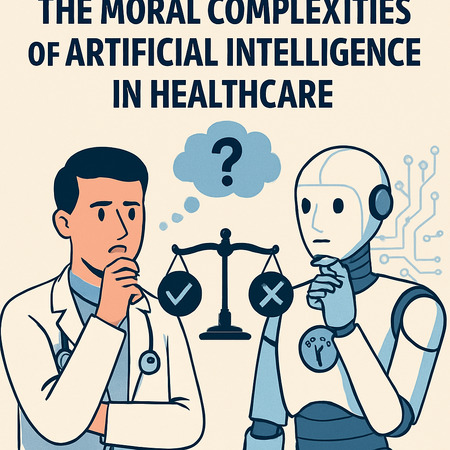
Consider the emergence of artificial intelligence and autonomous systems in contemporary society. Engineers and policymakers confront profoundly philosophical questions that transcend mere technical specifications: How should we embed moral values into algorithms? Who bears responsibility when autonomous vehicles must choose between protecting passengers and pedestrians? These are not technological questions amenable to algorithmic solutions; they are fundamentally philosophical inquiries into ethics, agency, and moral accountability. Without philosophical rigor, society risks deploying transformative technologies that embody unexamined assumptions and inadvertently perpetuate systemic inequalities.
The philosophical subdiscipline of epistemology—the study of knowledge itself—proves increasingly relevant in our information-saturated era. As digital platforms proliferate and misinformation spreads with unprecedented velocity, the question 'How do we know what we claim to know?' becomes not merely academic but essential to democratic discourse. Epistemological frameworks help us distinguish between justified belief and mere opinion, between evidence-based reasoning and ideological assertion. This capacity for critical evaluation constitutes an intellectual inoculation against epistemic manipulation and cognitive exploitation.
Moreover, philosophy's engagement with metaphysics—the nature of reality and existence—informs contemporary scientific paradigms in subtle yet profound ways. Quantum mechanics, for instance, challenges classical assumptions about determinism and causality, forcing physicists to grapple with questions that occupy philosophy's ancient domain. The interpretation of quantum phenomena requires metaphysical commitments about the nature of observation, reality, and measurement. This demonstrates that philosophy and empirical science are not opposed epistemologies but complementary modes of inquiry that illuminate different dimensions of human understanding.
The existentialist philosophers of the twentieth century offered particularly incisive critiques of modern alienation and meaninglessness. Figures such as Sartre and Camus articulated how technological societies risk reducing human existence to instrumental rationality, where individuals become mere functionaries within elaborate bureaucratic systems. Their work resonates profoundly with contemporary concerns about automation, digital surveillance, and the atomization of social life. By emphasizing radical freedom and authentic existence, existentialism challenges us to resist passive acceptance of predetermined roles and to assert agency over our lives.
Furthermore, philosophy facilitates cross-cultural dialogue and understanding. Non-Western philosophical traditions—including Confucianism, Buddhism, and African philosophy—offer alternative frameworks for conceptualizing ethics, community, and human flourishing. Engaging seriously with these traditions undermines ethnocentric assumptions embedded in Western thought and expands our repertoire of conceptual resources. In an increasingly interconnected world, such philosophical pluralism proves not merely intellectually enriching but pragmatically essential for negotiating global challenges that transcend cultural boundaries.
The practical importance of philosophy extends to personal existential questions that individuals inevitably confront: What constitutes a meaningful life? How should we balance individual autonomy with communal responsibility? What obligations do we bear toward future generations and non-human creatures? These questions lack definitive empirical answers; they require sustained philosophical reflection and dialogue. Individuals who engage seriously with philosophical inquiry develop greater cognitive flexibility, nuanced moral reasoning, and epistemic humility—the recognition that their understanding remains provisional and subject to revision.
In conclusion, philosophy represents not an antiquated discipline but an indispensable intellectual practice for contemporary civilization. As we navigate unprecedented technological capabilities, ecological crises, and social fragmentation, we require precisely the kind of rigorous conceptual analysis and normative reflection that philosophy provides. By cultivating philosophical thinking—characterized by intellectual honesty, conceptual clarity, and willingness to interrogate fundamental assumptions—we equip ourselves to respond thoughtfully to the defining challenges of our era. Philosophy, ultimately, is the cultivation of wisdom not merely for its own sake, but for the sake of human flourishing and social justice.