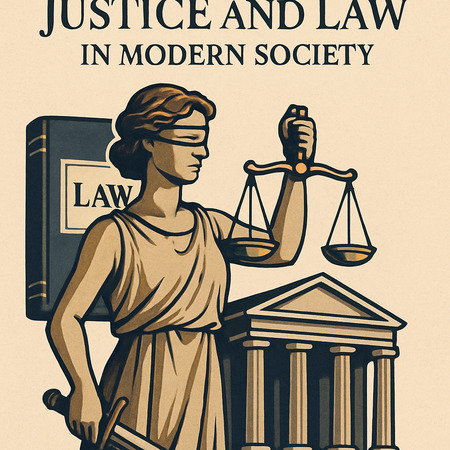
The Complex Relationship Between Justice and Law in Modern Society
The distinction between law and justice has long been a subject of profound philosophical debate, yet it remains remarkably relevant in contemporary societies where legal systems are constantly challenged to reconcile rigid statutes with evolving moral standards. While law might be understood as a formal framework of rules established and enforced by governmental authorities, justice represents something more elusive—a concept deeply rooted in fairness, equity, and moral righteousness that transcends mere compliance with written codes.
Consider the case of a struggling single mother who steals medicine for her gravely ill child. According to the letter of the law, her actions constitute theft, a crime for which she could be prosecuted and imprisoned. Yet many would argue that her actions were fundamentally just, driven by an overwhelming moral imperative to preserve her child's life. This scenario exemplifies the tension that constantly simmers beneath the surface of our legal institutions: the law may condemn certain actions, yet our conscience whispers that justice demands a different verdict.
The interpretation of law itself has become increasingly sophisticated and nuanced. Judges and legal scholars recognize that laws, no matter how meticulously drafted, cannot anticipate every conceivable situation that humanity might encounter. Consequently, the principle of judicial discretion has evolved to allow magistrates and judges to consider context, precedent, and the unique circumstances of individual cases. This flexibility, while necessary, can also be wielded as a double-edged sword, as decisions may be influenced by personal biases, cultural backgrounds, or political pressures that corrupt the ideal of impartial justice.
Moreover, legal systems across different cultures embody fundamentally different philosophies about what justice means. In some jurisdictions, the focus is predominantly rehabilitative, aiming to reform offenders and reintegrate them into society. In others, punitive approaches dominate, emphasizing retribution and deterrence. Still others prioritize restorative justice, seeking to repair harm and reconcile victims with perpetrators. None of these approaches can claim absolute superiority; each reflects the values and priorities of the society that created it.
The gap between law and justice becomes particularly pronounced when examining systemic inequalities. Historically marginalized communities frequently experience legal systems that ostensibly treat all citizens equally but in practice perpetuate historical injustices. Wealthy defendants can afford sophisticated legal representation, while impoverished individuals struggle within a system designed to be accessed effectively only by those with substantial resources. Thus, the law's blindfold, traditionally a symbol of impartiality, can unfortunately obscure these troubling realities.
Furthermore, as societies evolve, laws must be reformed to reflect changing understandings of what constitutes justice. Issues such as environmental protection, digital privacy, and artificial intelligence present novel challenges that traditional legal frameworks struggle to address adequately. Legislators face the formidable task of creating laws that are simultaneously protective, progressive, and practically enforceable.
Ultimately, law and justice exist in a delicate dance, each influencing and constraining the other. While perfect alignment between them may be an unrealistic aspiration, the pursuit of this alignment remains essential to maintaining legitimate, ethical legal systems that command genuine respect from the populations they govern.