The Counterintuitive Nature of Quantum Mechanical Phenomena
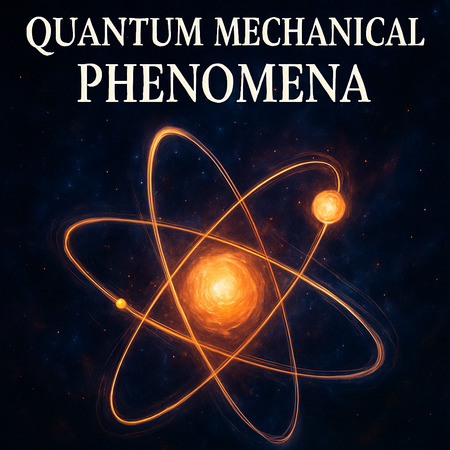
Quantum physics represents one of the most transformative intellectual revolutions in scientific history, fundamentally challenging our conventional understanding of reality at subatomic scales. Whilst classical Newtonian mechanics adequately describes macroscopic phenomena, the behaviour of particles at quantum levels necessitates an entirely reconceptualised framework that accommodates probabilistic rather than deterministic outcomes.
The quintessential characteristic distinguishing quantum mechanics from its classical counterpart is the principle of superposition. This concept posits that quantum systems can exist simultaneously in multiple states until the moment of measurement, whereupon the wavefunction collapses into a single definite state. This phenomenon generates profound epistemological questions regarding the nature of reality itself. Does measurement actively determine physical properties, or does it merely reveal pre-existing attributes? The Copenhagen interpretation suggests the former, implying that quantum systems possess no intrinsic properties independent of observation—a proposition that continues to perplex philosophers and physicists alike.
Complementary to superposition is wave-particle duality, an equally bewildering phenomenon demonstrating that entities such as electrons and photons exhibit characteristics of both particles and waves depending upon the experimental apparatus employed. This contextual nature of physical properties defies classical logic, as entities cannot logically be both particle-like and wave-like simultaneously. Nevertheless, experimental evidence unequivocally corroborates this dual nature, compelling the scientific community to embrace this apparent contradiction within quantum formalism.
Quantum entanglement represents perhaps the most philosophically provocative manifestation of quantum mechanics. When two particles become entangled, measuring a property of one particle instantaneously influences the corresponding property of its distant partner, irrespective of spatial separation. Einstein famously derided this phenomenon as "spooky action at a distance," expressing profound scepticism regarding such non-local correlations. However, empirical verification through Bell's theorem experiments has definitively established that entanglement constitutes a genuine feature of quantum reality rather than a mere theoretical artefact.
The practical implications of quantum mechanics have proven extraordinary. Semiconductors, lasers, and nuclear energy exemplify technological applications directly emerging from quantum theory. Furthermore, quantum computing represents an emergent field with potentially revolutionary consequences for computational paradigms. Quantum computers exploit superposition and entanglement to perform calculations exponentially faster than classical computers for specific problem categories, promising transformative applications in cryptography, drug discovery, and artificial intelligence.
Nevertheless, quantum mechanics remains conceptually unsatisfying to many scientists. The measurement problem—concerning what constitutes a "measurement" and why it fundamentally alters quantum systems—remains unresolved. Various interpretations persist, including the many-worlds interpretation, which posits that every measurement outcome actualises in parallel universes, and pilot-wave theory, which restores determinism through hidden variables. These interpretations yield identical empirical predictions, rendering them empirically indistinguishable despite their metaphysical divergence.
Furthermore, the incompleteness of quantum mechanics becomes apparent when attempting to reconcile it with general relativity. At Planck scales, quantum gravity effects become significant, yet no satisfactory unified theory currently exists. String theory and loop quantum gravity represent competing frameworks attempting this synthesis, though neither has achieved empirical confirmation.
The philosophical ramifications of quantum mechanics extend profoundly beyond physics. It challenges fundamental assumptions regarding causality, determinism, and the observer-independent existence of physical reality. These considerations have stimulated interdisciplinary dialogues between physicists, philosophers, and cognitive scientists regarding consciousness and physical reality's nature.
In conclusion, quantum mechanics remains humanity's most empirically successful yet conceptually perplexing scientific theory. Its counterintuitive predictions continue generating philosophical controversy whilst simultaneously enabling unprecedented technological capabilities. As quantum mechanics matures, resolving its interpretative ambiguities and integrating it with gravitational physics represents humanity's most formidable scientific endeavours.