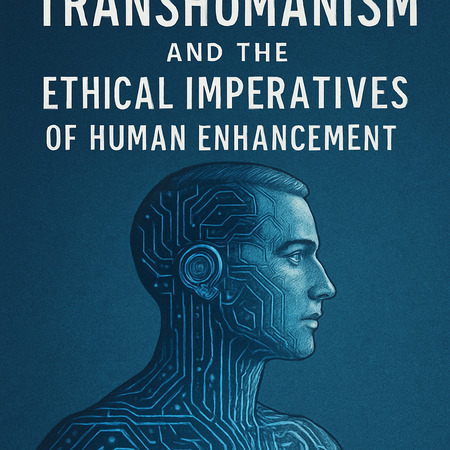
Transhumanism and the Ethical Imperatives of Human Enhancement
Transhumanism represents a philosophical and intellectual movement predicated on the conviction that humanity can and should transcend its current biological limitations through technological intervention. Rather than accepting the constraints imposed by our evolutionary heritage, transhumanists advocate for the deliberate augmentation of human physical, cognitive, and psychological capacities through converging technologies such as genetic engineering, nanotechnology, and artificial intelligence. This aspiration, whilst captivating to many proponents, simultaneously engenders profound philosophical and ethical quandaries that warrant meticulous examination.
The intellectual scaffolding of transhumanism rests upon several foundational premises. Firstly, the movement presumes that suffering and mortality constitute contingent rather than inevitable features of the human condition—problems amenable to technological solutions rather than existential facts to be resignedly accepted. Secondly, transhumanists maintain that the trajectory of technological progress is substantially irreversible and that embracing such progress constitutes a more prudent strategy than futilely attempting to restrain it. These postulations are not without merit; medical advances in prosthetics, pharmacology, and surgical intervention have demonstrably ameliorated countless lives, furnishing contemporary precedent for human enhancement efforts.
Nevertheless, the transhumanist agenda precipitates multifaceted concerns that extend beyond mere technological feasibility. The specter of inequitable access constitutes perhaps the most pressing immediate concern. Enhancement technologies would inevitably remain inaccessible to economically disadvantaged populations, potentially exacerbating existing disparities and engendering a biological caste system wherein the affluent literally diverge from the remainder of humanity. Such stratification would represent not merely an economic disparity but a categorical bifurcation of the species itself—a development with profoundly destabilizing social ramifications.
Furthermore, the philosophical implications warrant contemplation. Enhancement projects predicated on normative assumptions regarding desirable human characteristics inevitably embed particular cultural values and worldviews into biotechnological interventions. Whose conception of enhancement would predominate? Would enhancement efforts systematically privilege traits valued by dominant cultures whilst marginalizing alternative human expressions? The answers to such questions reveal how ostensibly neutral technological innovations are invariably laden with ideological presuppositions.
Another substantive objection pertains to authenticity and autonomy. If individuals substantially reconstruct their cognitive and physical substrates through technological means, in what sense do their achievements remain authentically theirs? Does profound enhancement risk attenuating the significance of human accomplishment by rendering it a mere artifact of technological scaffolding rather than the product of genuine human striving? These questions, though perhaps seemingly abstract, carry considerable psychological and existential weight.
Moreover, the transhumanist vision frequently underestimates ecological considerations and systemic interdependencies. Human enhancement conducted in isolation from ecological frameworks could precipitate unforeseen consequences, as history repeatedly demonstrates that technological interventions generate externalities extending beyond their immediate purview. A more comprehensive transhumanism would necessarily integrate environmental sustainability and systems-level thinking into its agenda.
Yet dismissing transhumanism entirely would constitute intellectual capitulation to an equally problematic position. The movement articulates legitimate aspirations to diminish suffering and expand human potential. Rather than wholesale rejection or uncritical acceptance, a more nuanced approach entails establishing robust ethical governance frameworks, ensuring equitable access to enhancement technologies, implementing stringent regulatory oversight, and maintaining philosophical humility regarding unforeseen consequences. Transhumanism represents neither inevitable destiny nor categorical imperative, but rather one possible trajectory among multiple futures—a future whose desirability fundamentally depends upon how judiciously we navigate its technological and ethical complexities.