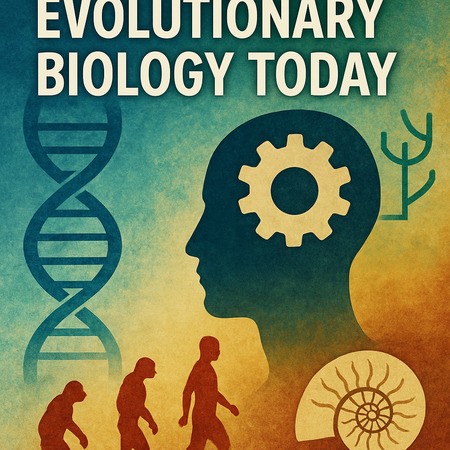
The Mechanisms and Implications of Evolutionary Biology Today
Evolutionary biology has transcended its historical characterization as merely descriptive science, instead establishing itself as a rigorous, mechanistic discipline capable of generating testable hypotheses about the diversification of life. At its philosophical core lies the principle of natural selection, articulated most comprehensively by Darwin, yet substantially refined through contemporary molecular and population genetic frameworks. Rather than viewing evolution as an inevitable progression toward complexity or perfection—a widespread misconception—modern biologists recognize it as an undirected process whereby heritable variations conferring reproductive advantages accumulate within populations across successive generations.
The synthesis between Darwinian theory and Mendelian genetics, crystallized during the mid-twentieth century, fundamentally transformed our understanding of hereditary mechanisms. Specifically, the recognition that discrete genetic units transmit traits probabilistically, rather than through blending inheritance, resolved longstanding theoretical inconsistencies. Contemporary genomic sequencing has exponentially accelerated this synthesis, revealing the molecular architecture underlying phenotypic variation and permitting unprecedented scrutiny of evolutionary processes at multiple hierarchical levels—from molecular substitution rates to ecosystem-scale community dynamics.
A particularly compelling dimension of modern evolutionary biology concerns the investigation of convergent evolution, whereby distantly related organisms independently evolve strikingly similar morphological or physiological characteristics in response to analogous selective pressures. The evolution of camera-like eyes in cephalopods and vertebrates, despite their last common ancestor possessing only rudimentary light-sensitive structures, exemplifies this phenomenon. Such convergences not merely corroborate the explanatory power of natural selection but simultaneously illuminate the constraints and possibilities within biological design space.
Moreover, contemporary evolutionary biology increasingly interrogates the mechanisms of speciation—the process whereby populations diverge sufficiently to preclude successful interbreeding. Traditionally conceptualized as resulting primarily from geographic isolation, speciation appears considerably more nuanced empirically. Polyploidy-mediated speciation in plants, sexual selection-driven divergence, and ecological niche specialization all contribute to reproductive isolation. These mechanisms frequently operate in sympatry, challenging earlier paradigmatic assumptions regarding geographic necessity.
The field has simultaneously grappled with apparent discordances between microevolutionary observations—readily demonstrable changes in allele frequencies within populations—and macroevolutionary patterns evident in the fossil record. The punctuated equilibrium hypothesis, proposing that evolutionary stasis predominates interrupted by rapid speciation events, provoked considerable theoretical debate. However, contemporary paleontological and phylogenetic methodologies increasingly reconcile these seemingly contradictory observations, suggesting that apparent gaps in the fossil record often reflect genuine periods of morphological stasis rather than incomplete preservation.
Epigenetic mechanisms have further complicated traditional gene-centric evolutionary models, introducing heritable phenotypic modifications occurring independently of DNA sequence alteration. Whilst the evolutionary significance of epigenetic inheritance remains contested, accumulating evidence suggests that such mechanisms may facilitate phenotypic plasticity and potentially accelerate adaptive evolution under particular circumstances. This development necessitates refinement of the modern synthesis, integrating insights from developmental and systems biology.
Contemporary evolutionary biology also addresses profound implications for conservation biology, medicine, and biotechnology. Understanding pathogen evolution remains critical for antimicrobial stewardship and vaccine development, whilst evolutionary principles inform genetic counseling regarding hereditary disease susceptibility. Furthermore, synthetic biology increasingly exploits evolutionary mechanisms, utilizing directed evolution approaches to engineer proteins and organisms possessing novel functionalities.
Ultimately, evolutionary biology represents far more than historical reconstruction; it constitutes a powerful analytical framework for comprehending biological complexity, predicting organismal responses to environmental change, and appreciating humanity's position within nature's continuum. As environmental pressures intensify globally, such evolutionary perspectives become increasingly indispensable for informed policy formulation and biological stewardship.