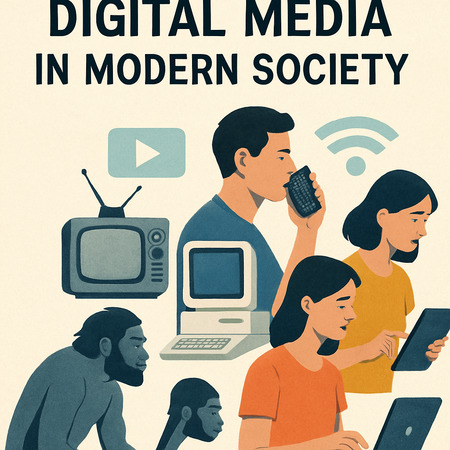
The Evolution of Digital Media in Modern Society
The landscape of human communication has been fundamentally transformed by the proliferation of digital media, a phenomenon that extends far beyond the mere technological advancement of devices and platforms. Rather, it represents a seismic shift in how information is disseminated, consumed, and interpreted by billions of individuals across the globe. What was once confined to traditional gatekeepers—newspapers, television stations, and publishing houses—has now been democratized, allowing ordinary citizens to become creators, publishers, and critics simultaneously.
This radical transformation, however, is not without its complexities and contradictions. On one hand, digital media has enabled unprecedented access to knowledge and fostered global communities united by shared interests that transcend geographical boundaries. Individuals from disparate backgrounds can now collaborate on projects, exchange ideas instantaneously, and amplify marginalized voices that were previously silenced by mainstream institutions. The Arab Spring and various social justice movements have demonstrated the mobilizing power of digital platforms when harnessed for collective action.
Conversely, the same mechanisms that facilitate connection have become conduits for misinformation and manipulation. Algorithms, designed ostensibly to enhance user experience by personalizing content, inadvertently create echo chambers where individuals are predominantly exposed to information that confirms their existing beliefs. This phenomenon, often termed "filter bubbles," has been implicated in the deepening of political polarization and the erosion of shared factual understanding. Furthermore, the business models underlying most digital platforms—predicated on advertising revenue and user engagement—incentivize sensationalism and outrage, thereby undermining the quality of public discourse.
The psychological impact of constant digital connectivity cannot be underestimated. Research has increasingly illuminated the correlation between excessive social media consumption and elevated rates of anxiety, depression, and diminished self-esteem, particularly among adolescents whose identities are still forming. The curated nature of online personas exacerbates unrealistic comparisons and fosters a culture of validation-seeking through numerical metrics such as "likes" and "shares." Paradoxically, despite facilitating connection, digital media has contributed to widespread feelings of isolation and disconnection from authentic human interaction.
Nevertheless, the digital revolution continues to evolve in unexpected directions. Artificial intelligence and machine learning technologies are reshaping content creation, curation, and distribution, introducing both promising possibilities and troubling ethical quandaries. Deepfakes and synthetic media threaten to further complicate our ability to distinguish truth from fabrication. Simultaneously, emerging awareness of these challenges has spawned new movements advocating for digital literacy, media criticism, and responsible technology use.
Ultimately, digital media represents a double-edged sword—an immensely powerful tool whose consequences are entirely contingent upon how it is wielded by both individuals and institutions. Rather than viewing technology as inherently good or bad, society must engage in critical reflection about the values embedded within digital systems and demand accountability from the corporations that control them. The future trajectory of digital media will be determined not by technological inevitability, but by conscious, collective choices about what kind of informational and social ecosystems we wish to cultivate. Only through such deliberate engagement can we hope to harness the beneficial potential of digital media while mitigating its inherent dangers.