The Paradox of Artificial Intelligence in Contemporary Society
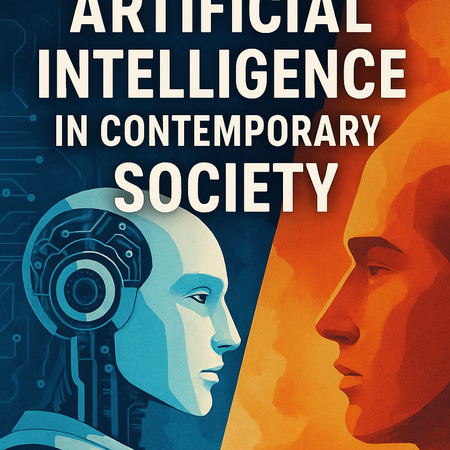
The meteoric ascendancy of artificial intelligence across virtually every domain of human endeavor has precipitated an unprecedented epistemological crisis. While proponents herald AI as humanity's most consequential innovation since the industrial revolution, detractors contend that we are precipitously hurtling toward a future where machines superintend human affairs with minimal meaningful oversight. This dichotomy, however, obscures the nuanced reality that characterizes contemporary AI implementation: neither utopian salvation nor dystopian nightmare, but rather a profoundly ambiguous landscape fraught with both extraordinary opportunity and substantive peril.
Consider the pharmaceutical sector, where AI-driven drug discovery has demonstrably accelerated the identification of promising therapeutic compounds. DeepMind's AlphaFold, for instance, resolved the protein-folding problem—a challenge that had confounded biochemists for decades—effectively instantaneously. This achievement presages a revolution in our comprehension of disease mechanisms and the expedited development of novel treatments. Simultaneously, however, this technological prowess raises disquieting questions about epistemic authority: as algorithms increasingly mediate scientific knowledge production, we must interrogate whether human researchers risk becoming mere functionaries executing computational directives rather than creative agents engaged in genuine inquiry.
The employment ramifications of AI ubiquity warrant equally sophisticated analysis. While automation has historically displaced workers in manufacturing sectors, contemporary AI systems manifest a qualitative difference—they encroach upon domains previously considered the inviolable preserve of cognitive labor. Radiologists, paralegals, financial analysts, and even software engineers now confront the prospect that their expertise might be superseded by increasingly sophisticated algorithms. Yet this narrative of technological unemployment, while containing kernels of validity, often elides the countervailing historical pattern: technological revolutions, though dislocating extant workforces, have ultimately generated novel employment categories and stimulated economic productivity. The pertinent question, therefore, concerns not whether displacement will occur, but whether institutional mechanisms exist to facilitate equitable transition for affected workers.
Perhaps most consequential are the ethical predicaments attending algorithmic decision-making systems. AI systems trained on historically contingent datasets inevitably perpetuate and frequently amplify extant biases embedded within their training data. Facial recognition technologies demonstrate demonstrably higher error rates for individuals with darker skin tones; hiring algorithms exhibit systematic preference for candidates sharing demographic characteristics with previous successful employees. These aren't incidental glitches but rather structural manifestations of the axiom that algorithms encode the prejudices of their creators and training datasets. When such systems adjudicate consequential determinations—creditworthiness, parole eligibility, university admissions—the ostensible objectivity of computational processes masks profound injustice.
Moreover, the concentration of AI capabilities within a handful of technologically preeminent corporations raises troubling questions about democratic governance and epistemic sovereignty. These organizations effectively function as quasi-governmental authorities, establishing norms and parameters that constrain what billions of individuals can accomplish through digital mediation. Their opacity—the proprietary nature of training data, algorithmic architectures, and optimization criteria—renders meaningful public scrutiny effectively impossible. Citizens remain perpetually subject to systems whose logic remains inscrutable, their own agency mediated through infrastructures whose functioning escapes democratic deliberation.
Yet to characterize AI reductively as either malevolent or beneficent represents an analytical impoverishment. The technology remains profoundly instrumentalist—its implications contingent entirely upon the values, regulatory frameworks, and distributional mechanisms through which societies choose to implement it. Climate modeling powered by AI could furnish unprecedented clarity regarding ecological tipping points, enabling more efficacious environmental stewardship. Educational personalization systems might democratize access to sophisticated tutoring, attenuating educational inequities that have persisted for centuries. Conversely, without intentional intervention, these same technologies could crystallize extant hierarchies and concentrate unprecedented power within already privileged institutions.
The exigency, therefore, consists not in technophobic rejection nor uncritical embrace, but rather in cultivating institutional capacity for sophisticated governance. This demands interdisciplinary expertise encompassing computer science, philosophy, economics, and political theory. It requires investing in algorithmic transparency, establishing robust mechanisms for bias detection and mitigation, and ensuring that AI's material benefits accrue equitably across society rather than accumulating within narrow strata. Most fundamentally, it necessitates reasserting human agency over technological trajectories, recognizing that artificial intelligence is ultimately an artifact of human choice, responsive to human values—or, dangerously, to the absence thereof.