The Intersection of Neuroscience and Artificial Intelligence
The convergence of cognitive science with contemporary technological advancement has fundamentally altered our understanding of both human consciousness and machine intelligence. This interdisciplinary domain, which synthesizes insights from neuroscience, psychology, philosophy, and computer science, confronts us with increasingly sophisticated questions about the nature of cognition itself—questions that transcend traditional disciplinary boundaries and challenge our most fundamental assumptions about intelligence and awareness.
Consider the remarkable case of Dr. Elena Vasquez, a cognitive neuroscientist at a leading research institution who spent fifteen years investigating how the human brain processes linguistic ambiguity. Her longitudinal studies revealed that when confronted with semantically ambiguous sentences, the brain engages in a remarkably efficient process of parallel interpretation, simultaneously entertaining multiple meanings before rapidly consolidating on the most contextually appropriate interpretation. What fascinated her most, however, was the discovery that this process occurred largely beneath conscious awareness. The implications were profound: consciousness, as we typically conceive it, appeared to be merely the tip of an enormous cognitive iceberg.
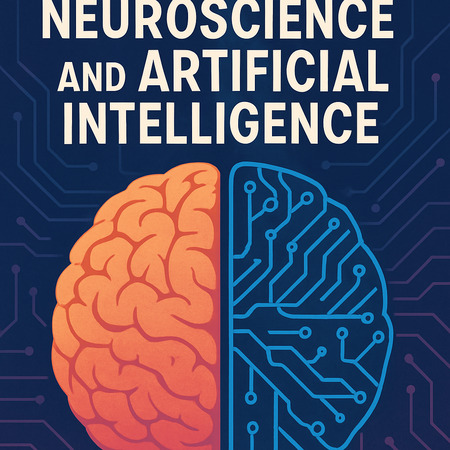
This observation prompted Vasquez to pivot her research toward artificial neural networks—specifically, deep learning architectures modeled loosely on biological neural structures. She hypothesized that if machines could replicate the brain's capacity for parallel processing and contextual disambiguation, they might achieve a form of linguistic competence previously thought to require human consciousness. Her subsequent experiments demonstrated that artificial neural networks, trained on sufficiently large datasets, could not only match human performance on ambiguity resolution tasks but occasionally surpass it, all without possessing any form of subjective awareness or intentionality.
The implications reverberate throughout cognitive science. If machines can execute sophisticated cognitive operations without consciousness, what precisely is consciousness for? This question inverts traditional neuroscientific inquiry. Rather than asking how neural mechanisms generate consciousness, researchers increasingly ask whether consciousness serves any functional purpose at all, or whether it represents an evolutionary epiphenomenon—a byproduct of neural complexity rather than its driver.
Yet this conclusion proves premature upon closer examination. Recent work in neurophenomenology—the rigorous study of subjective experience in relation to neural activity—suggests that consciousness may facilitate cognitive flexibility in unprecedented ways. Unlike artificial systems constrained by their training data and architectural parameters, human consciousness appears to enable a form of metacognitive awareness that permits individuals to transcend learned patterns, to engage in counterfactual reasoning, and to generate genuinely novel conceptual combinations. In essence, while machines excel at pattern recognition and optimization within predetermined parameters, humans possess an unparalleled capacity for reconceptualizing the parameters themselves.
This distinction becomes particularly salient in creative domains. When confronted with an unprecedented challenge, an artificial system typically fails catastrophically, lacking the cognitive flexibility to reframe the problem in novel ways. Humans, by contrast, leverage conscious reflection to generate alternative interpretative frameworks, essentially asking themselves not merely "how should I solve this problem?" but "what if I reconceived what this problem actually is?" This capacity for fundamental reframing appears inseparable from subjective awareness.
Moreover, emerging research in affective neuroscience demonstrates that emotional responses—those visceral, immediate reactions we experience consciously—encode vast quantities of embodied knowledge accumulated through evolutionary and personal history. Emotions function as rapid-access repositories of evaluative information, enabling humans to make sophisticated judgments under conditions of uncertainty and incomplete information. Artificial systems attempting to replicate this function typically require explicit algorithmic specification of countless decision-relevant variables.
The future of cognitive science thus hinges not on reducing human cognition to machine-executable algorithms, but on understanding how consciousness, embodiment, emotion, and neural complexity interact to generate the distinctive forms of intelligence that characterize human thought. Rather than demonstrating that machines can think like humans, contemporary cognitive science increasingly suggests that truly intelligent machines might need to develop something functionally analogous to consciousness—not necessarily subjective awareness identical to ours, but some mechanism capable of recursive self-modification and fundamental reconceptualization. This realization promises to reshape both neuroscience and artificial intelligence research, establishing cognitive science not as a reductionist enterprise but as an integrative science of mind.