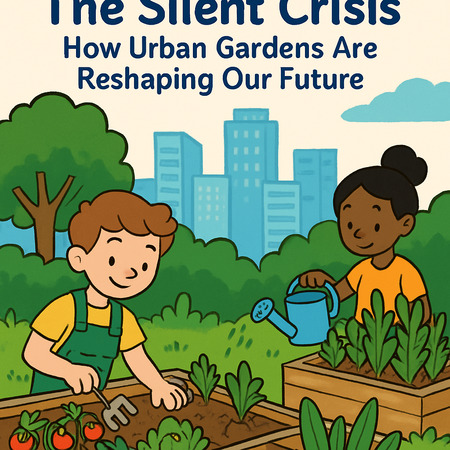
The Silent Crisis: How Urban Gardens Are Reshaping Our Future
In the heart of sprawling metropolises, where concrete jungles have suffocated green spaces for decades, an unexpected revolution is taking root. Urban gardening has emerged as a powerful antidote to environmental degradation, transforming barren rooftops and abandoned lots into flourishing ecosystems that challenge our conventional understanding of city living.
The environmental crisis facing modern cities cannot be overstated. Air quality has been compromised by vehicular emissions, soil contamination has rendered vast areas infertile, and the urban heat island effect—whereby cities experience significantly higher temperatures than surrounding rural areas—has become increasingly pronounced. These interconnected problems have been compounded by the displacement of native species and the fragmentation of natural habitats. Yet, remarkably, a grassroots movement has begun to address these challenges through the cultivation of botanical spaces within urban environments.
Urban gardens function as multifaceted solutions to environmental degradation. First and foremost, they act as carbon sinks, absorbing atmospheric carbon dioxide and mitigating the effects of climate change. Additionally, green spaces reduce surface temperatures through evapotranspiration, thereby alleviating the urban heat island effect. Perhaps most intriguingly, these gardens serve as corridors for biodiversity, allowing pollinators and other species to navigate fragmented landscapes. The ecological benefits are substantial, yet they represent merely one dimension of this phenomenon.
Beyond their environmental significance, urban gardens have catalyzed social transformation. Communities previously disconnected from food production have been reunited with the soil, gaining agency over their nutritional destinies. Food deserts—areas where affordable, nutritious food is scarce—have been gradually infiltrated by community-led agricultural initiatives. Simultaneously, these spaces have fostered social cohesion, as strangers have been bound together by shared purpose and collective stewardship. The psychological benefits of engaging with nature have likewise been documented extensively, with horticultural activities demonstrating remarkable efficacy in reducing anxiety and depression.
The economic implications warrant consideration as well. Property values adjacent to green spaces have been demonstrated to increase substantially, suggesting that environmental restoration and economic prosperity need not remain antagonistic forces. Furthermore, urban agriculture has spawned novel employment opportunities, from green roof installation to sustainable landscape design. Ironically, the very degradation that precipitated environmental concern has inadvertently created a market for solutions that were previously deemed impractical.
However, the trajectory of this movement remains uncertain. Systemic challenges persist: zoning regulations frequently inhibit agricultural activities, access to capital remains inequitably distributed, and climate uncertainty threatens even well-established initiatives. Moreover, scaling these localized successes to meaningfully impact global environmental metrics presents formidable challenges that demand structural transformation rather than merely incremental improvement.
Nevertheless, the significance of urban gardens extends beyond their quantifiable environmental outputs. They embody a fundamental shift in consciousness—a recognition that human communities and natural systems are inextricably intertwined, and that restoration is possible even in our most urbanized contexts. These verdant spaces serve as tangible reminders that the future need not be predetermined by past mistakes. As cities continue expanding, the question becomes not whether we can afford to prioritize green spaces, but whether we can afford to neglect them.