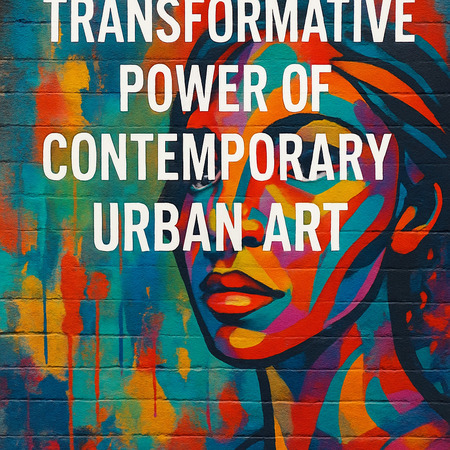
The Transformative Power of Contemporary Urban Art
Art has perpetually served as a mirror reflecting society's most profound aspirations and contradictions. In recent decades, however, the traditional boundaries between what is considered 'legitimate' art and what is dismissed as mere decoration have been fundamentally challenged by the explosive growth of contemporary urban art movements. What was once perceived as vandalism has been gradually reconceptualized as a legitimate and powerful form of artistic expression, transforming concrete jungles into vibrant galleries accessible to everyone.
The metamorphosis of urban spaces through street art represents far more than aesthetic enhancement; it embodies a complex dialogue between artists, communities, and institutions. Muralists and graffiti artists, having previously operated in legal grey zones, are increasingly commissioned by city councils and private corporations to create large-scale installations. This legitimization reflects a broader societal recognition that art need not be confined within museum walls to possess cultural significance and artistic merit. Furthermore, these public artworks have been demonstrated to improve mental health, foster community cohesion, and even stimulate economic revitalization in neglected neighborhoods.
Consider the case of cities like Berlin, Melbourne, and São Paulo, where street art has become so prevalent that entire districts are now defined by their artistic character. These locations have experienced substantial increases in tourism, property values, and creative industry investment. The irony, however, cannot be overlooked: the very commercialization that has granted street artists legitimacy and financial stability simultaneously threatens the subversive essence that originally defined their work. Artists face an existential dilemma—acceptance by mainstream institutions may necessitate compromising their rebellious spirit and authentic message.
Moreover, the democratization of art through public murals has profound implications for cultural representation. Communities historically marginalized and underrepresented in traditional art institutions have found their voices amplified through street art. Indigenous artists, immigrants, and working-class communities have utilized these public canvases to share narratives that would otherwise remain untold in conventional galleries. This phenomenon illustrates how art functions not merely as aesthetic object but as a vehicle for political consciousness and social justice advocacy.
The technical evolution of urban art cannot be disregarded either. Contemporary street artists employ sophisticated techniques—stenciling, projection mapping, augmented reality integration—that rival conceptual complexity found in traditional fine art. These innovations demonstrate that artistic merit cannot be determined by medium or location but rather by the artist's vision, technical skill, and the profundity of ideas communicated.
Yet challenges persist. Gentrification often accompanies artistic revitalization, paradoxically displacing the very communities whose stories inspired the art initially. Additionally, questions regarding artistic property rights, permanence versus impermanence, and the relationship between intentional artistic creation and environmental decay remain contentious.
Ultimately, contemporary urban art represents a paradigm shift in how societies understand and value artistic expression. By shattering conventional hierarchies, it has demonstrated that transformative art emerges wherever human creativity intersects with public space, regardless of institutional validation. This democratization suggests a future where art belongs not exclusively to elites but to all inhabitants of shared urban environments.