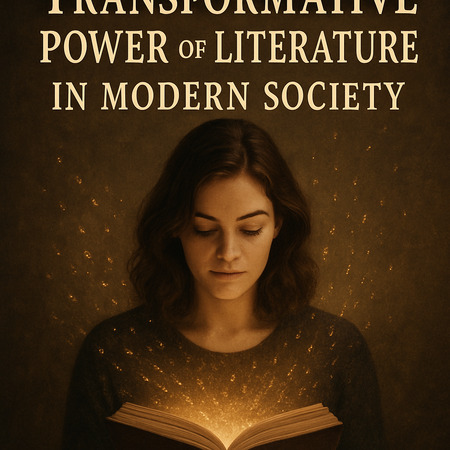
The Transformative Power of Literature in Modern Society
Literature has long been regarded as one of humanity's most profound mechanisms for understanding ourselves and the world around us. Yet in an age dominated by digital media and instant gratification, the significance of this ancient art form is frequently underestimated by contemporary society. Nevertheless, compelling evidence suggests that literary engagement continues to exert considerable influence over our cognitive development, emotional intelligence, and cultural consciousness.
When a novel is carefully crafted by a skilled author, it functions as a mirror through which readers are enabled to examine their own experiences and beliefs from fresh perspectives. This transformative process occurs because readers are compelled to inhabit the consciousness of characters whose backgrounds, values, and circumstances may differ dramatically from their own. By stepping into these alternative realities, individuals develop a heightened capacity for empathy—a quality that has been scientifically demonstrated to correlate with improved interpersonal relationships and social cohesion. The imagination is stretched beyond its ordinary boundaries, allowing readers to contemplate complex moral dilemmas and philosophical questions that might otherwise remain abstract.
Furthermore, literature serves as a repository of cultural memory and historical wisdom. Through the works of celebrated authors, generations are connected across centuries, united by universal themes of love, loss, ambition, and mortality. Masterpieces such as those penned by Shakespeare or Austen have been translated into countless languages and adapted across multiple media formats, yet their essential truths remain undiminished. These narratives are not merely entertaining; they represent humanity's continuous struggle to impose meaning upon existence itself.
The educational value of literature cannot be overstated. When students engage with challenging texts, their vocabulary is expanded, their analytical skills are honed, and their understanding of linguistic nuance is deepened. Reading comprehension, once developed through literary study, facilitates success across all academic disciplines. Moreover, the habit of reading has been associated with enhanced mental resilience and reduced anxiety—benefits that extend far beyond the classroom.
However, alarming trends suggest that literary reading is declining among younger populations, displaced by alternative forms of entertainment and information consumption. This phenomenon is troubling because it implies that future generations may be deprived of the irreplaceable insights that only literature can provide. The depth of reflection required by serious reading cannot be substituted by superficial engagement with digital content.
Conversely, a renaissance of literary interest has been observed in certain communities, particularly among young adults who have rediscovered classic and contemporary works through social media platforms. This renewed enthusiasm demonstrates that literature's appeal remains potent when books are presented within accessible contexts. Publishers and educators are increasingly recognizing that literature must be actively promoted as an essential component of human flourishing, not relegated to the status of an optional luxury.
In conclusion, literature's relevance in the modern world should not be questioned but rather celebrated. Its capacity to educate, inspire, challenge, and console remains unparalleled. As society continues to evolve at an unprecedented pace, the timeless wisdom contained within literary works becomes ever more invaluable. Therefore, cultivating a culture that values reading is not merely an academic concern but a fundamental investment in humanity's future.