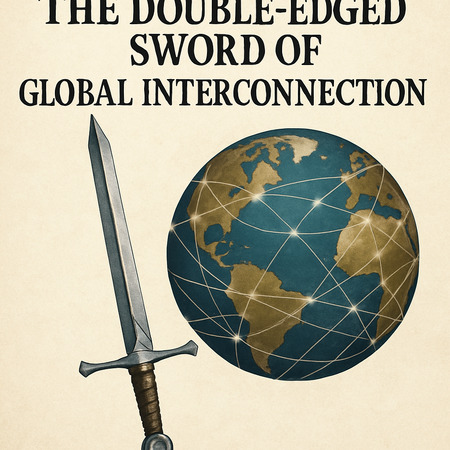
The Double-Edged Sword of Global Interconnection
Globalization, often depicted as an unstoppable force reshaping our world, represents far more than merely the expansion of international trade and commerce. Rather, it constitutes a multifaceted phenomenon wherein economic systems, cultural values, technological innovations, and political ideologies are increasingly interwoven across geographical boundaries. While this interconnectedness has undoubtedly generated unprecedented opportunities for prosperity and human development, it simultaneously has given rise to complex challenges that governments and societies continue to grapple with.
The technological revolution, particularly the advent of digital communication and transportation networks, has fundamentally transformed how goods, services, and ideas are exchanged. Manufacturing corporations headquartered in wealthy nations have relocated their production facilities to regions where labour costs are substantially lower, thereby creating employment opportunities in developing countries. However, this displacement of manufacturing has coincided with the erosion of traditional industrial sectors in developed economies, leaving countless communities economically vulnerable and socially fractured.
Cultural homogenization represents another consequential dimension of globalization that warrants serious consideration. As multinational corporations distribute their products and entertainment content across the globe, indigenous traditions and local languages risk being overshadowed by dominant Western cultural narratives. Small businesses that have operated within their communities for generations find themselves unable to compete against well-financed international competitors. Paradoxically, while globalization facilitates the sharing of diverse perspectives and artistic expressions, it simultaneously threatens the very distinctiveness that makes cultural heritage invaluable.
Moreover, the financial systems binding nations together have proven remarkably fragile. The 2008 global financial crisis demonstrated how interconnected economies can transmit economic shocks instantaneously across continents, affecting millions of ordinary citizens who had little understanding of the complex instruments that triggered the catastrophe. This vulnerability underscores the reality that integration, though economically rational, carries substantial risks that cannot be entirely mitigated through regulation or strategic planning.
Yet dismissing globalization as wholly detrimental would represent an equally incomplete perspective. Access to affordable consumer goods has improved living standards for billions of people. Medical innovations developed in one country are rapidly disseminated worldwide, saving countless lives. Educational opportunities have been democratized through online platforms, enabling individuals from remote regions to acquire knowledge previously accessible only to privileged populations. International collaboration on environmental issues and public health challenges has become not merely desirable but absolutely essential for human survival.
The challenge confronting contemporary societies lies not in reversing globalization—an objective that would prove both impossible and counterproductive—but rather in shaping its trajectory toward more equitable outcomes. Policymakers must implement frameworks that harness globalization's generative potential whilst simultaneously protecting vulnerable populations from its disruptive consequences. This requires fostering dialogue between diverse stakeholders, implementing progressive taxation systems that ensure corporations contribute fairly to the societies where they profit, and investing substantially in education and retraining programs for displaced workers.
Ultimately, globalization represents humanity's attempt to transcend parochial limitations and construct a genuinely interconnected world. Whether this ambitious endeavour culminates in shared prosperity or deepened inequality depends fundamentally upon the collective decisions made by governments, businesses, and citizens in the coming decades.